
A brown stain spreading across the chimney breast after heavy rain, worse every winter, is one of the most common calls we take about chimney work in Cranleigh. It is rarely the fireplace. It is the stack: perished pointing, cracked flaunching, or lead that has lifted where the chimney meets the roof.
Key Points
- The exact order a stack is raked out and repointed
- What the free survey checks on your stack and in what sequence
- When a stack needs a partial or full rebuild instead
- The four pieces of lead that keep a chimney breast dry
Our founder has spent more than 36 years on Surrey roofs, and every chimney repair, rebuild and piece of lead flashing in Cranleigh carries our 25-year written workmanship guarantee, handed over before we leave.
Call Wey Valley Roofing for a free survey of your Cranleigh chimney before the next run of wet weather finds the gaps, and get a fixed price in writing.
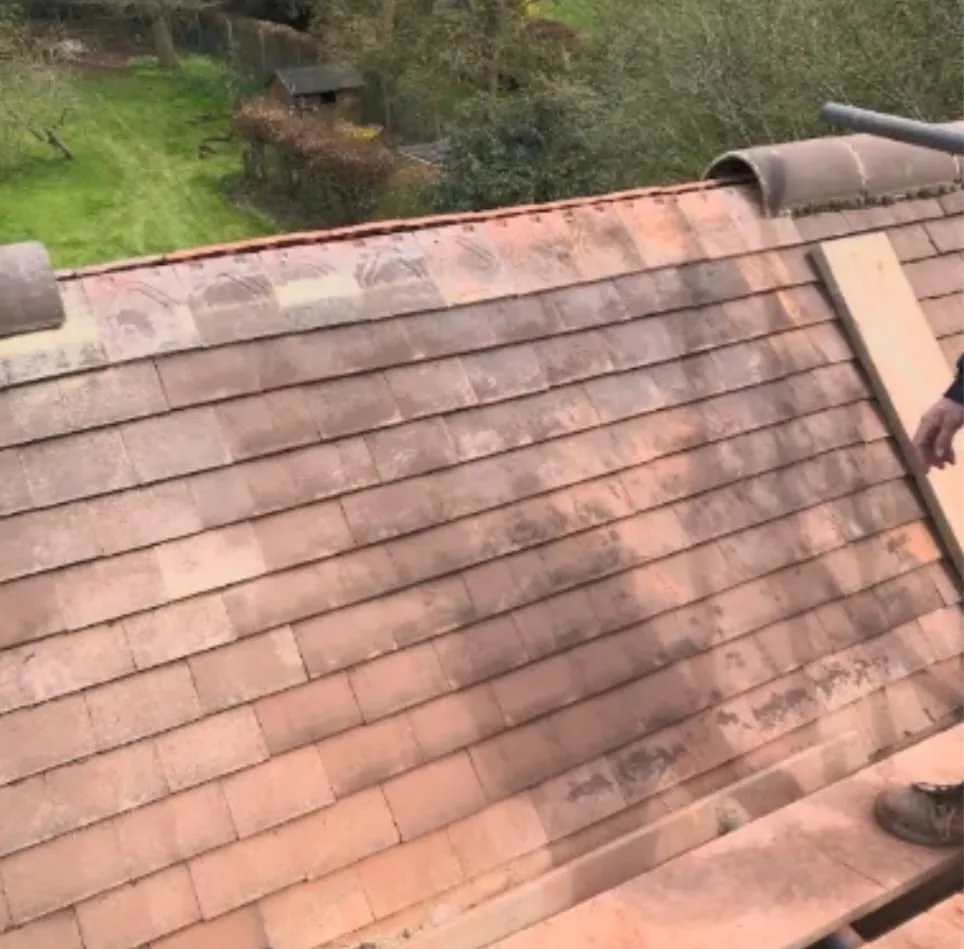
Chimney Pots, Flaunching and Cowls
We do not sweep chimneys. We are roofers, and our chimney work starts where the stack leaves the roof. But much of what spoils a flue happens up there: a cracked pot, an open top with no cowl, mortar crumbling into the flue, birds building in the gap.
So the part we handle is the top of the stack:
- Pots replaced where they have cracked or worked loose
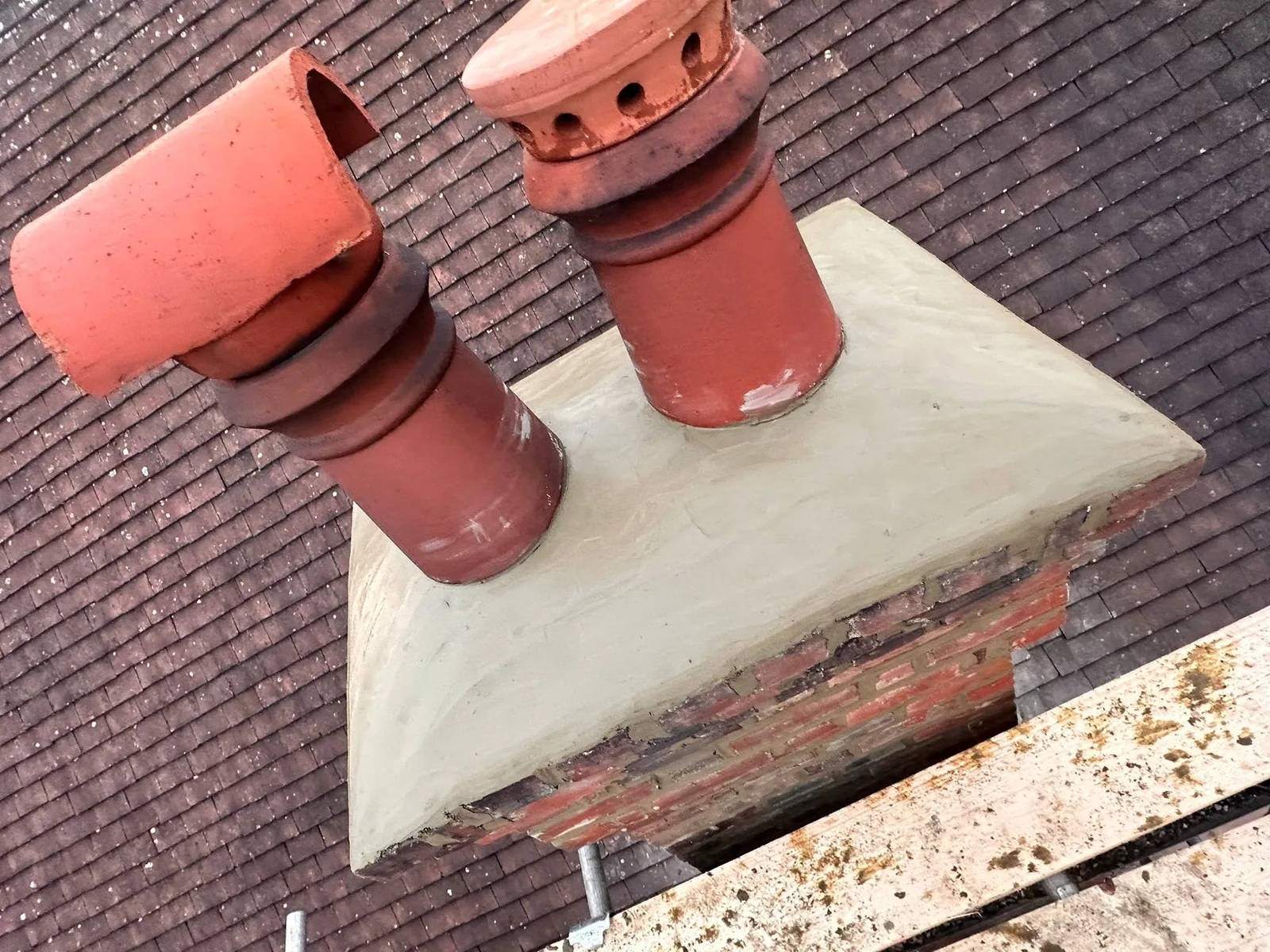
- Flaunching renewed, so each pot sits in a solid, sloped bed of mortar that sheds rain
- Cowls fitted to suit the flue, one for a flue in use and a ventilated cap for one that is not
- Cowls with a mesh guard where birds keep getting in
Each of those keeps rain and debris out of the flue below. Small jobs. They decide whether the chimney stays usable.
Ring Wey Valley Roofing on 07428 300474 to book a free survey of your Cranleigh chimney work, with a drone look at the stack where it helps and a fixed price in writing.
Quick Quote OnlineCall Now: 07428 300474Call Scott — 24/7 Emergency07428 300474
Chimney Repairs and Repointing in Cranleigh
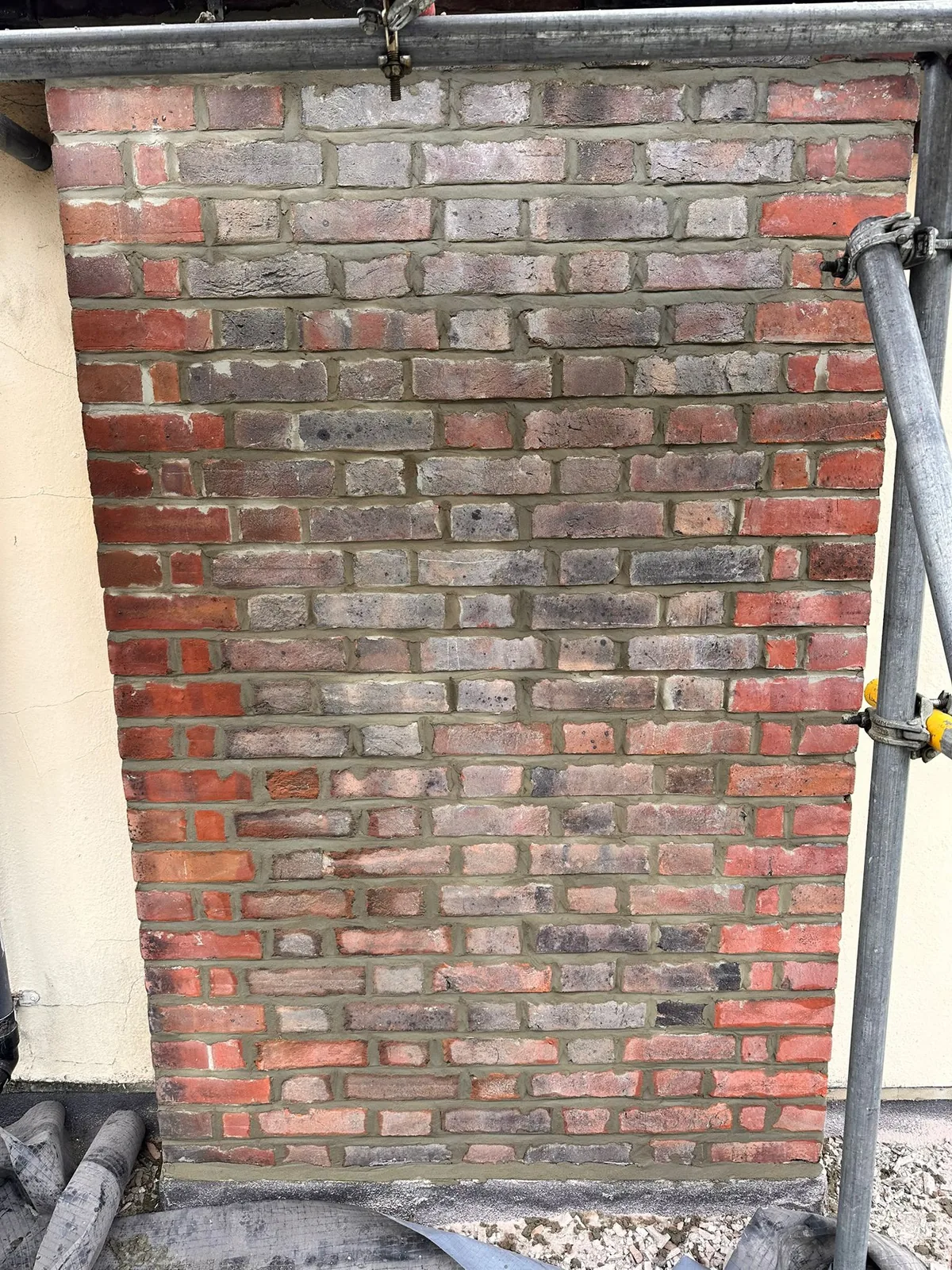
On older brick stacks in Cranleigh and across the Wey Valley, the mortar goes long before the brick. Joints open up, rain gets behind the face, and frost does the rest. The stack is the most exposed brickwork on the house, so it shows first.
Repointing done properly follows a set order:
- Rake out the perished joints by hand, back to sound mortar, without chipping the brick edges
- Brush the joints clean and dampen them so the new mortar is not starved of water
- Repoint in a mortar matched to the brick and softer than it, never harder
- Tool each joint to a profile that sheds water off the face
The softer mix matters. A hard cement joint on soft brick forces the weather into the brick, and the faces spall within a few winters. If repointing and new flaunching will cure it, we say so and price exactly that.
The Free Chimney Survey
What we check is the stack itself, and that check is the free survey.
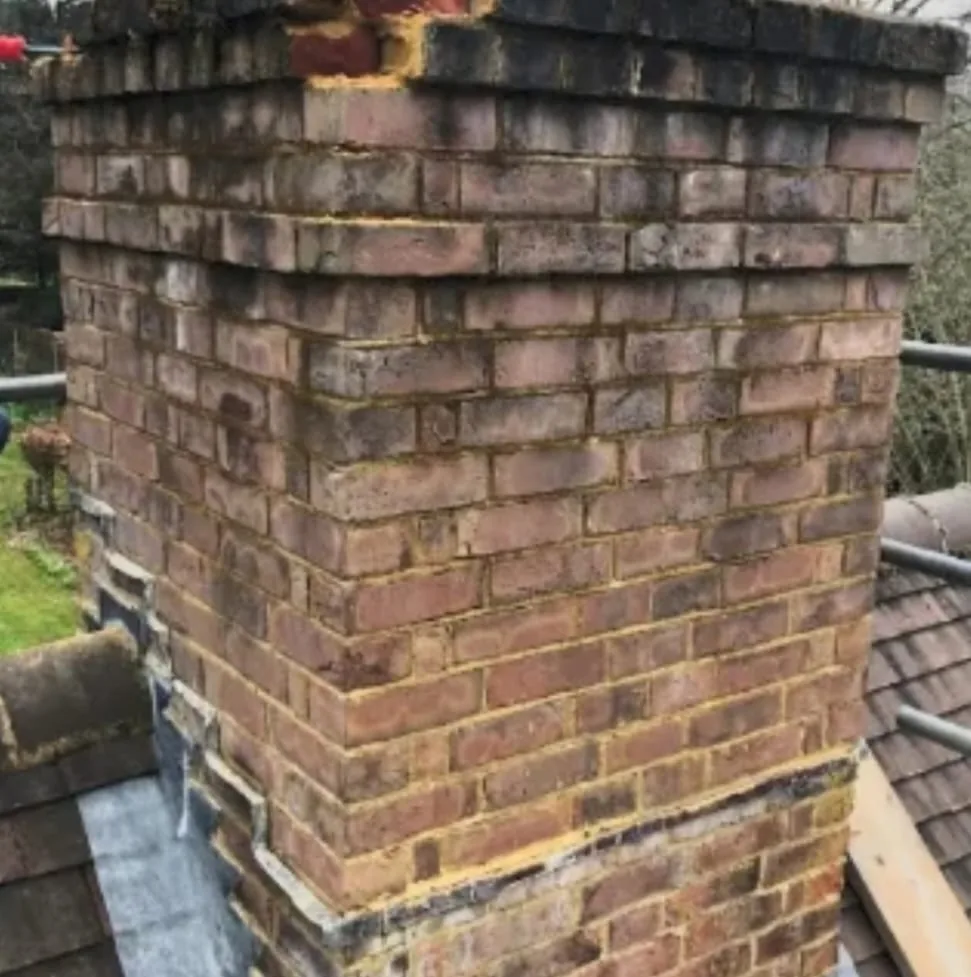
It runs in this order. First the stack from the ground, for lean and for staining down the brickwork. Then up close, or by drone where that helps, looking at pointing, flaunching, pots, cowls and the lead where the stack meets the roof. Then an honest fixed price in writing, with no obligation and no charge for the quote.
If chimney repointing is all it needs, the price says that and nothing more. Access is part of the check too. The survey settles whether you can repoint a chimney without scaffolding or whether the stack needs a proper working platform round it. That depends on the stack's height and the pitch of the roof beneath it. Not on guesswork.
Chimney Stack Rebuilds and Removal in Cranleigh
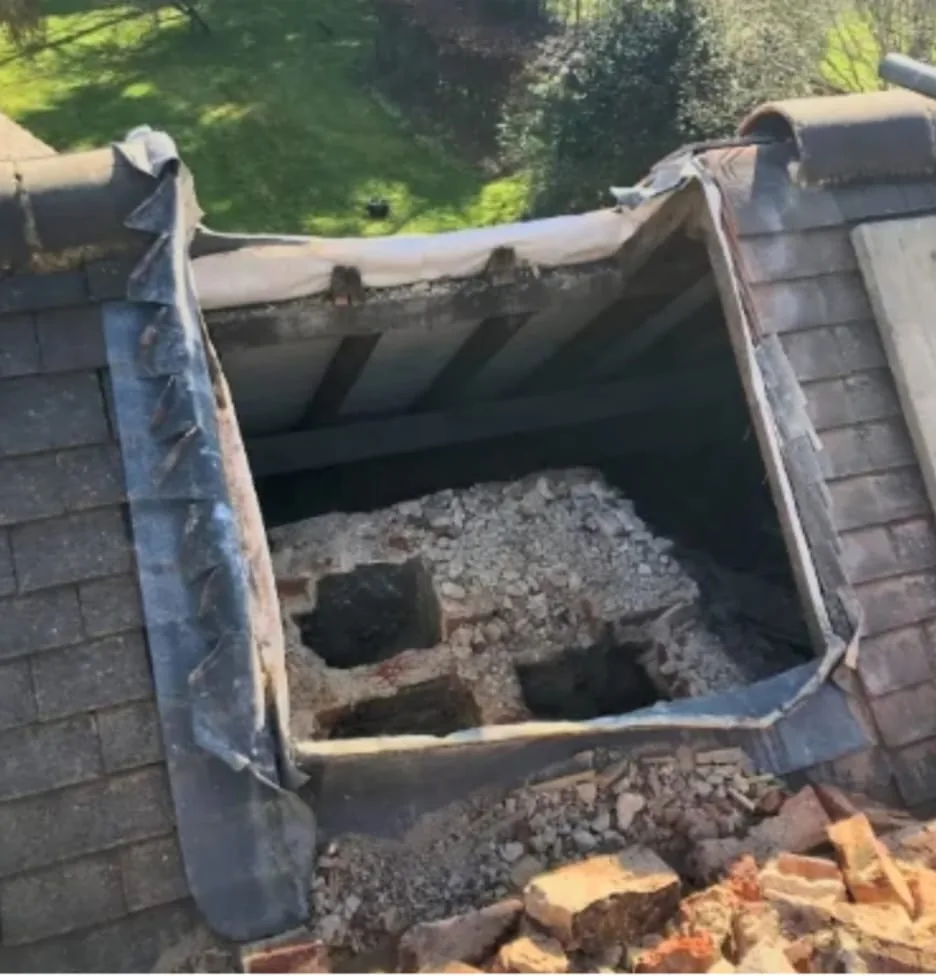
Some stacks are past repointing. Bricks have blown, the top courses rock under a hand, or the whole thing leans away from the prevailing weather. Then it is a rebuild, partial or full.
A partial rebuild takes the stack down to sound brickwork, often only the top few courses. A full rebuild takes it down to roof level. Either way the sequence is the same: take down, relay the courses true, form new flaunching, reset the pots and cowls, then dress new lead flashings to Lead Sheet Association guidance. A rebuilt stack also has to keep within the proportions for chimney stability that Approved Document A sets out.
Taking a stack out altogether is structural building work and sits outside what we do. Our job is keeping the one you have standing and dry.
Keeping the Chimney Breast Dry
What goes in the fireplace is not our trade. The stack above it is.
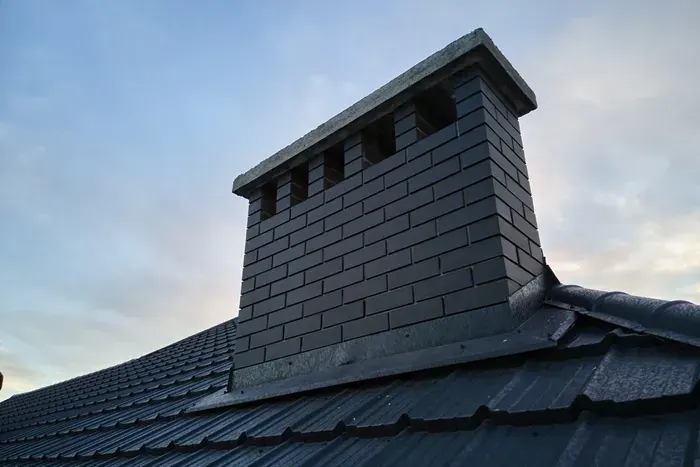
Before an open fire or a stove goes back into use, the chimney over it should be sound and watertight. Water tracking down a stack into the chimney breast often looks like a fireplace problem. It is usually a roof problem, and the lead is where we look:
- Apron flashing across the front of the stack
- Step flashings up each side, chased into the brick joints
- A back gutter behind the stack to carry water round it
- The tiles or slates around the stack refixed to BS 5534
Get those right and the breast below stays dry, whatever is burning in the grate.
Capping and Ventilating Flues
Lining a flue is work done inside the chimney, and we do not do it. Our flue solutions are at the top, where the flue meets the weather.
A flue in use needs a pot that is sound, set firm in its flaunching, and a cowl that keeps rain out without strangling the draw. A disused flue wants capping with a ventilated cowl, so rain stays out but air still moves through. Seal one dead and the damp has nowhere to go. It ends up in the chimney breast instead.
Every piece of chimney work we do is carried out by our own local roofers, never subcontracted, and carries the same 25-year written workmanship guarantee as a new roof, handed over before we leave. Call any hour and a real person answers. The survey and the fixed price cost you nothing.
Ring Wey Valley Roofing on 07428 300474 to book a free survey of your Cranleigh chimney work, with a drone look at the stack where it helps and a fixed price in writing.
Quick Quote OnlineCall Now: 07428 300474Call Scott — 24/7 Emergency07428 300474