
Most people worried about a roofing bill are worried about paying for the wrong job: a new roof when a repair would do, or a cheap patch that fails by winter. Here is what a roofer working across Surrey and the Wey Valley weighs before putting a figure on paper.
Summary
- The order a fair roofing price is built in, step by step
- Signs that show whether you need a repair or a new roof
- Seven things that make one roof dearer than another
- How British Standards and insulation rules feed into a re-roof price
- Costly mistakes, from chasing day rates to skipping the survey
Our founder has spent more than 36 years on Surrey roofs, and every job, repairs included, carries a 25-year written workmanship guarantee handed over before the team leaves. If you need a roofer in Godalming, we cover that too.
Ask Wey Valley Roofing for a free survey and fixed written price anywhere in Surrey and the Wey Valley, and know what your roof needs before you spend anything.
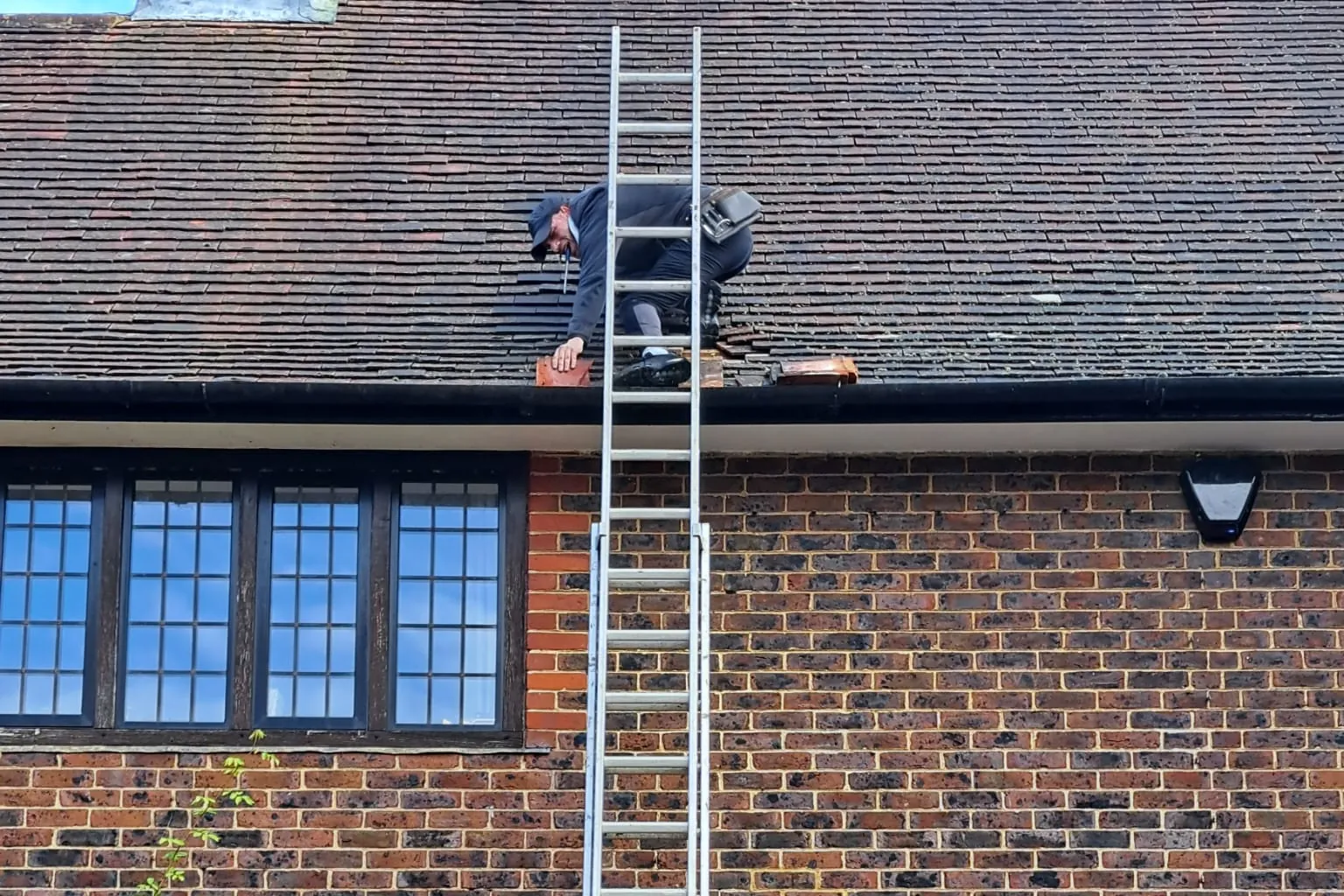
How much should I pay for a roofer?
How much you should pay for a roofer depends on the job, not a going rate: roof size and pitch, materials, access and scaffolding, what has to come off first and the state of the timbers. Pay a fixed written price, set after a proper survey, that shows each of those.
Ring Wey Valley Roofing for a free survey and a fixed written price that shows exactly what your roof needs across Surrey and the Wey Valley.
Quick Quote OnlineCall Now: 07428 300474Call Scott — 24/7 Emergency07428 300474
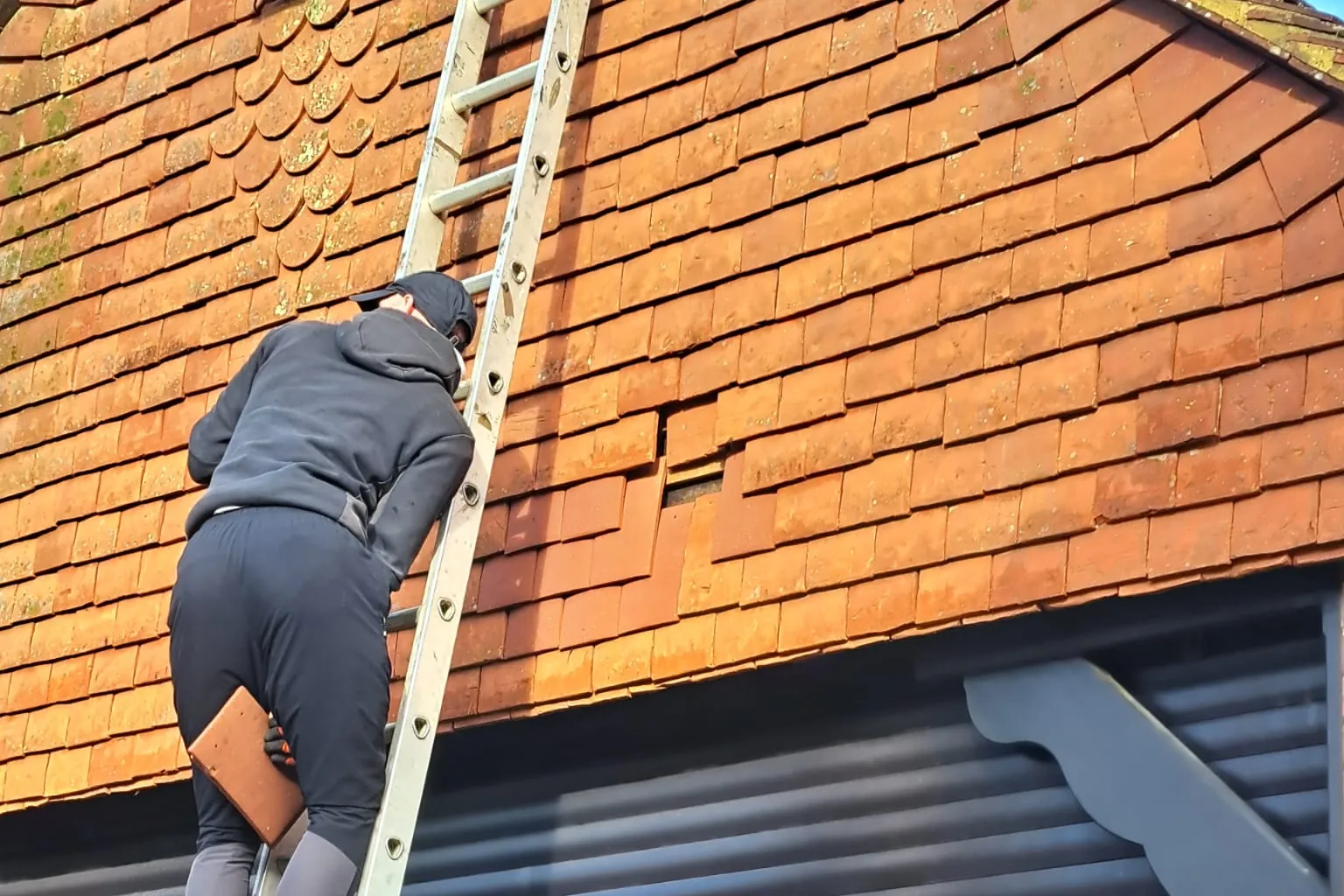
How a roofing price is put together
A fair roofing price is built in a set order. Once you know the order, you can see what you are paying for.
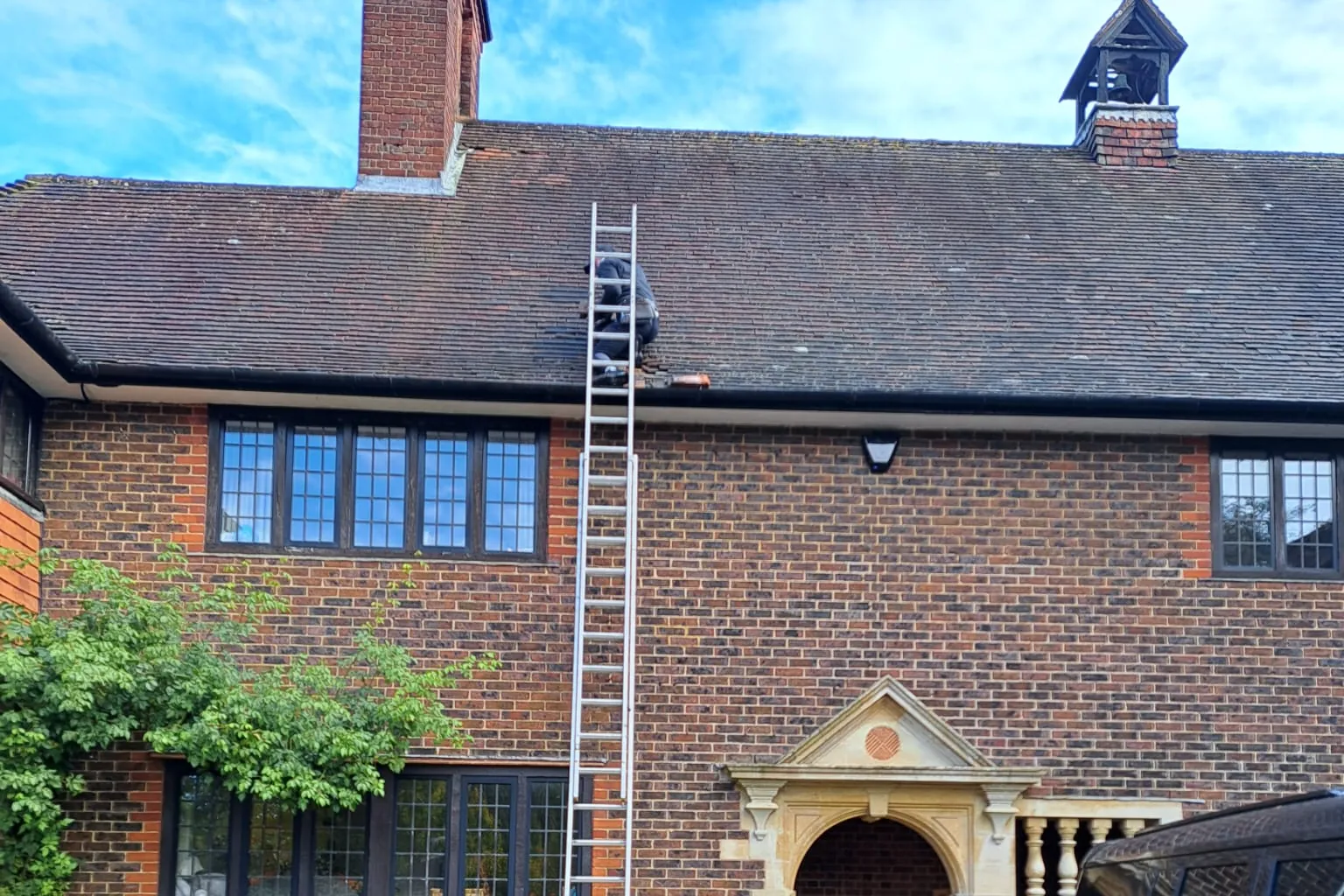
- Look at the roof properly. Check it from the ground, from a ladder, from inside the loft and with a drone view where it helps. A price given without this is a guess.
- Decide what the job actually is. It might be a roof repair, a section stripped and relaid, or a full roof replacement. Each is a different price, and getting this wrong is an expensive error to make.
- Work out the labour. This means how many roofers, for how many days, plus labourer rates for stripping, carrying and clearing. A roofer day rate or hourly rate sits here, though on most jobs you are paying for the finished work rather than the clock.
- Add the roofing materials. That covers tiles or slates, battens, membrane, fixings and lead. On flat roofing it is the deck and covering, and on metal roofing it is the sheet.
- Add access and site costs. These are scaffolding, skips and waste removal, and protection for the garden, the drive and anything fragile below.
- Add VAT where it applies. A written price should say plainly whether the figure includes it.
Each of those lines should show on the written price. Ours is a fixed figure in writing, with no charge for the survey or the quote and no obligation.
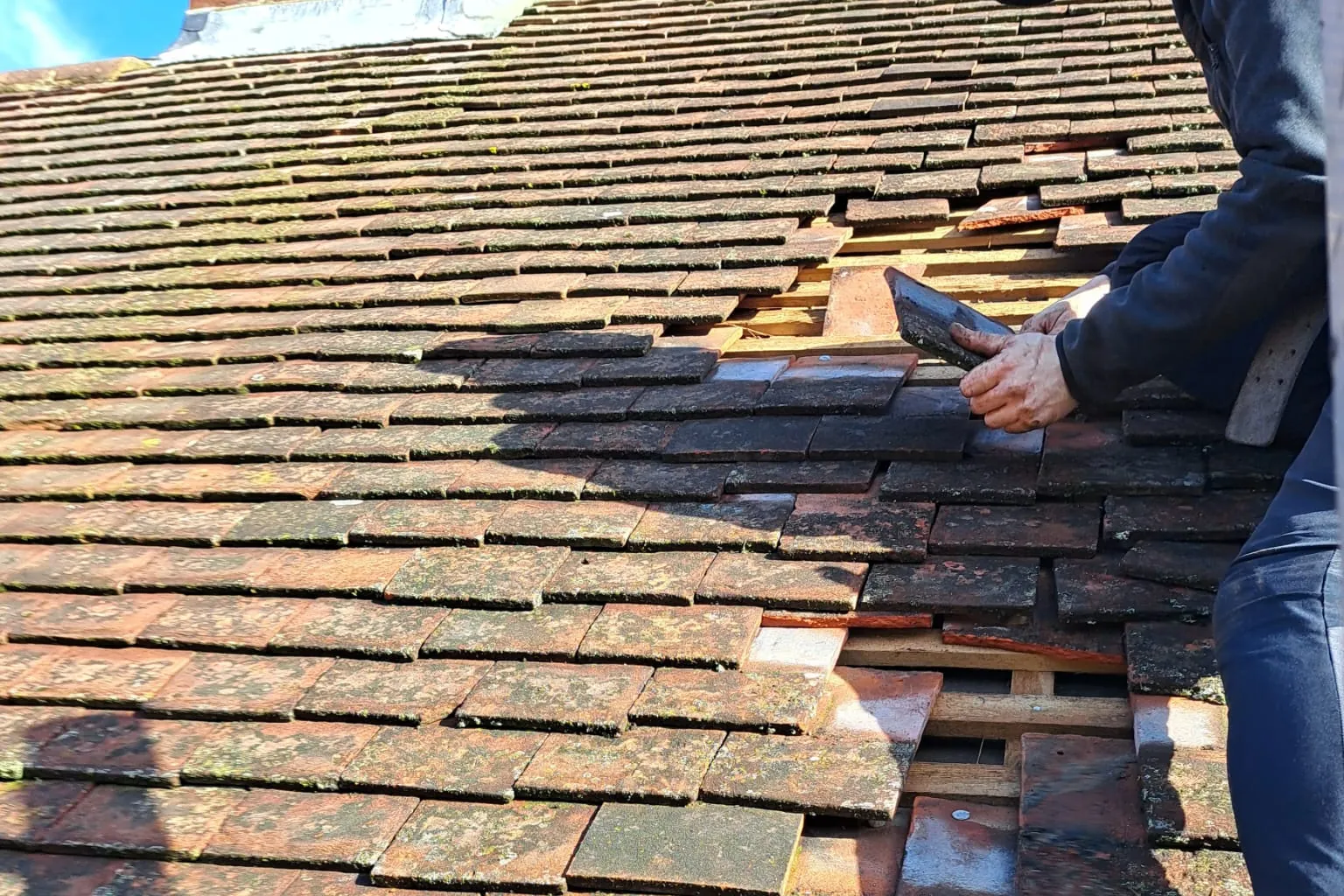
Signs that tell you what kind of job you have
The biggest lever on any roofing bill is the size of the job. The roof often gives you a fair idea of that before anyone climbs up.
- One damp patch after heavy rain, or a single slipped or cracked tile, is usually a repair.
- Several damp patches, a sagging ridge line or daylight showing in the loft points to something larger than a tile.
- Crumbling mortar on the ridge or round the chimney pots means repointing or flaunching, which is priced as its own piece of work.
- A flat roof with blisters, splits or standing water may take a patch or a full re-cover. That depends on what the deck underneath is like.
- Moss thick enough to lift tiles calls for removal by hand and a soft wash, not a new roof.
Signs point the right way, but they do not settle it. A survey does. If a smaller repair will do, we say so rather than selling you a new roof, and the honest answer to what you should pay often turns out to be less than you feared. We can also help if you need a roofer in Guildford.
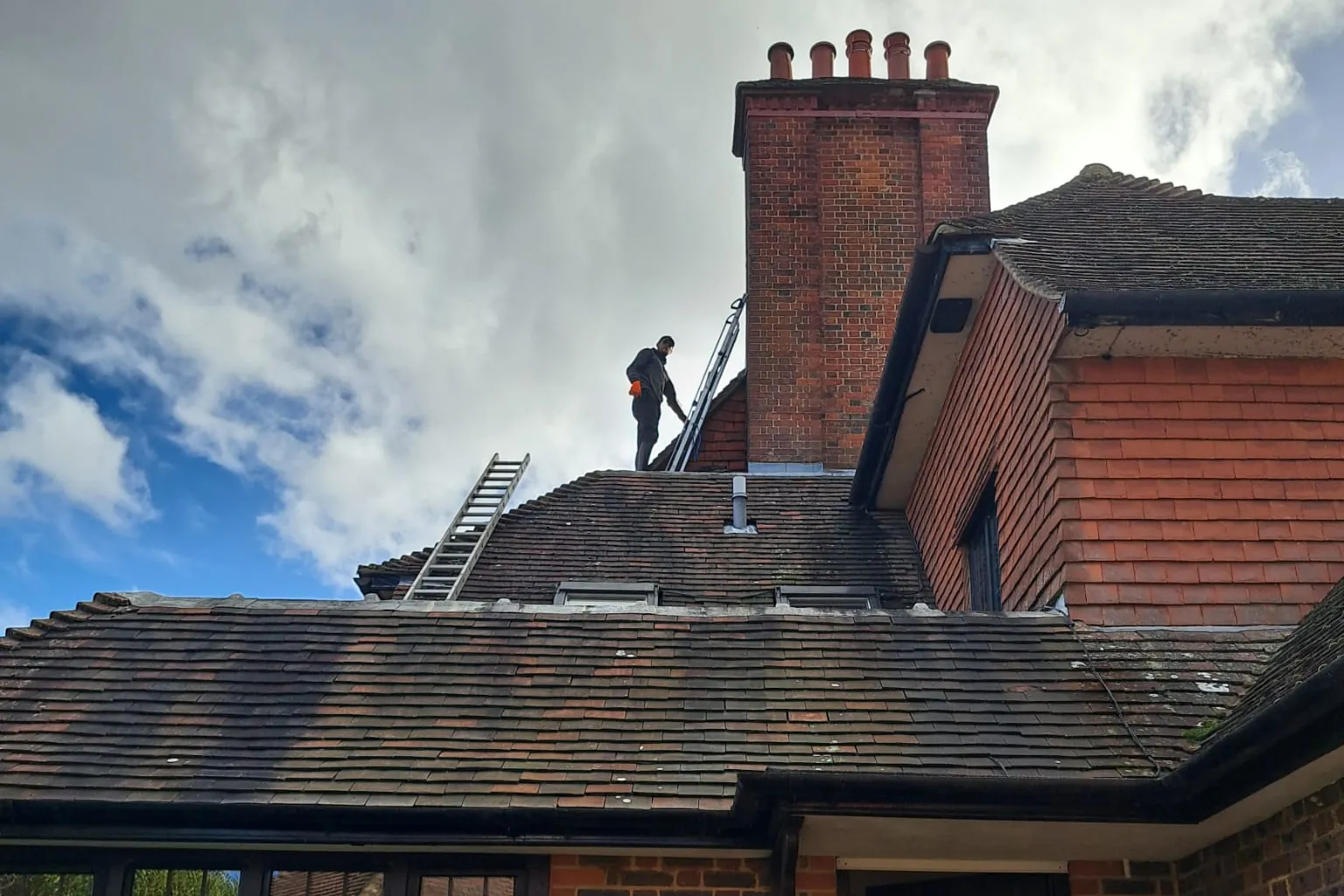
What makes one roof dearer than another
There is no single going rate for a roofer, and a national average tells you very little about your own house. These are the things that move the figure.
- Size and roof complexity. Valleys, hips, dormers, rooflights and chimneys all add cutting, detailing and leadwork.
- Pitch and height. A steep roof or a three-storey house needs more scaffolding and slower, more careful work.
- The material. Concrete tile, clay tile, natural slate, EPDM rubber, GRP fibreglass, torch-on felt and standing seam zinc all differ in cost and in laying time.
- What has to come off first. Stripping old coverings and battens and disposing of them is real work, and a new build never carries it.
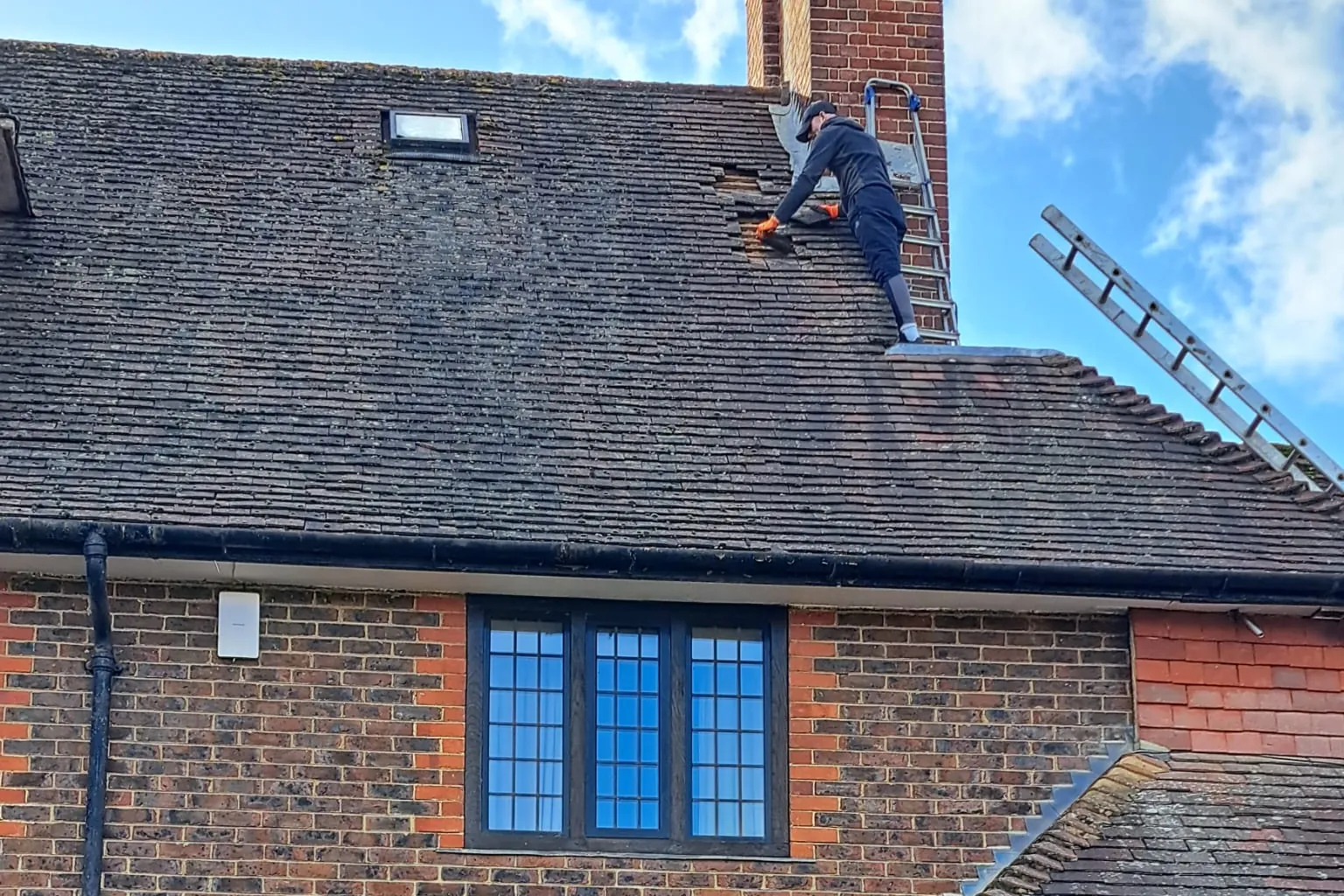
- The state of the structure. Rotten timbers, a soft deck or tired fascias found during stripping change the job.
- Access. No side access, a conservatory below or a narrow lane for the scaffold lorry all add time.
- Timing. An emergency repair at night in a storm is a different job from one planned for a dry week.
Knowing those levers is more use to you than a figure, because a figure that ignores them will be wrong for your roof. Looking for a roofer near you in Surrey or the Wey Valley? The survey costs nothing.
The rules and safety work built into the price
Part of what you pay for is set by standards rather than by choice. We fix tiles and slates to BS 5534, which governs fixing and wind uplift, so every piece is held against the wind for that site. On an exposed roof, that means more clips, more nails and more time. Ventilation is worked out to BS 5250 to keep condensation out of the loft, and leadwork is done to Lead Sheet Association guidance.
On a re-roof, Approved Document L matters. Renewing more than half of a roof's area means bringing the whole roof up to the current insulation standard, where that is technically and economically feasible. We raise it at the survey and include it in the price, rather than springing it on you halfway through. GOV.UK sets out when building regulations approval is needed, and a larger re-roof can fall within it.
Safety carries a cost too. Some older garage roofs are asbestos cement. We assess those and advise the safe compliant route under the Control of Asbestos Regulations 2012. The regulations decide how that material is handled, and that shapes the price.
Common mistakes people make over roofing costs
- Judging a job on the rate. A low roofer hourly rate over more days, or a job done twice, costs more than one done once and done properly. Our piece on what a roofer charges per hour covers the rates in more detail.
- Accepting a figure without a survey. A price from a photo or a phone call cannot allow for what is under the tiles.
- Assuming everything is included. Check the written price for VAT, scaffolding and waste removal.
- Assuming a leak means a new roof. Plenty of leaks come from one slipped tile or a tired flashing.
- Pressure washing to save money. It strips the surface and drives water where it should not go. We soft wash and scrape by hand.
- Treating a coating as a cure. A coating does not fix broken tiles or failed battens, and we do not push them.
- Forgetting the guarantee. Know whether it is in writing and what it covers. Ours is a 25-year written workmanship guarantee on every job, repairs included, handed over before we leave.
Ring Wey Valley Roofing for a free survey and a fixed written price that shows exactly what your roof needs across Surrey and the Wey Valley.
Quick Quote OnlineCall Now: 07428 300474Call Scott — 24/7 Emergency07428 300474