
Most people asking this have a damp patch, a slipped tile or a quote in hand, and want to know if the number is fair. As a roofer working across Surrey and the Wey Valley, we open up what sits inside a roofing bill so you can read any price clearly.
The Essentials
- Why most roofing work is priced per job rather than by the hour
- How labour hours turn into a total on four common roof jobs
- Why a roofer's wage, a day rate and your price are different numbers
- The six things that make your own roof job dear or cheap
- Which safety rules and standards add cost that should never be cut
- What the signs from the ground say about the size of your job
Our founder has spent more than 36 years on Surrey roofs, our own roofers do the work, and every job carries a 25-year written workmanship guarantee. We can also help if you need a roofer in Godalming.
Call Wey Valley Roofing for a survey and a fixed price in writing, with no charge for the quote, anywhere in Surrey and the Wey Valley before a small fault grows.
How much does a roofer charge per hour in the UK?
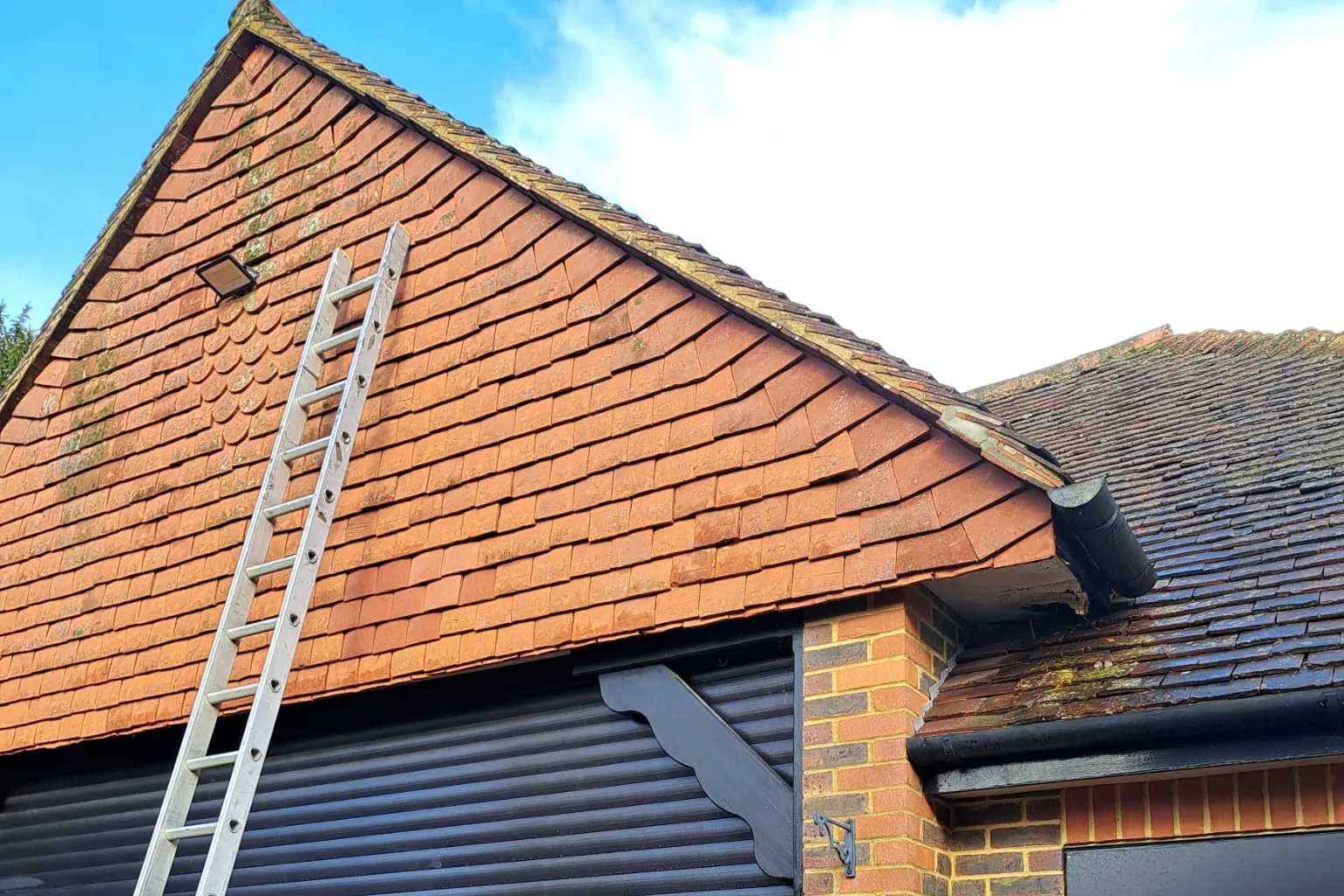
How much a roofer charges per hour in the UK depends on region, roof type, access, materials and the kind of business doing the work, so no single figure holds. In the common case you are not billed by the hour at all: you are given a fixed price for the whole job.
Before you weigh up any hourly rate, call Wey Valley Roofing for a survey and a fixed price in writing, with no charge for the quote and no obligation.
Quick Quote OnlineCall Now: 07428 300474Call Scott — 24/7 Emergency07428 300474
How long roofing work takes and what it disrupts
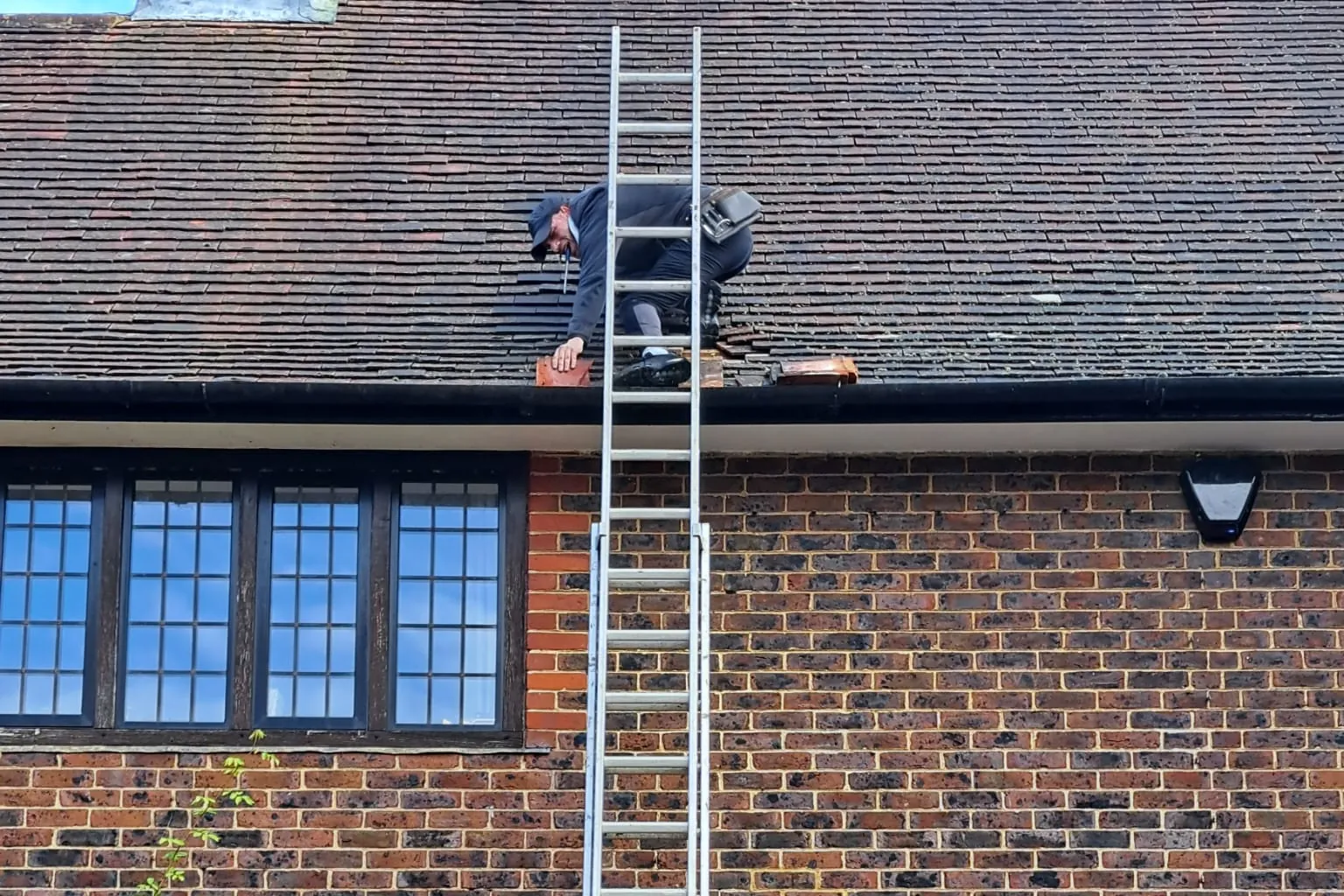
An hourly rate only means something once you know the hours, and time on the tiles is often the smallest part of a roofing job, behind access, getting materials up and getting waste down. This is how labour hours become a total:
- A slipped or cracked tile. A short repair. The bill is mostly travel, access equipment and the minimum charge that makes a visit worth the trip.
- Ridge rebedding or chimney repointing. A day or two of labour plus a tower or scaffolding, so access and labour costs both weigh in.
- A flat roof renewed. A few days, with the old covering stripped, so roofing materials and waste removal climb the list.
- A full reroof. A week or more on a typical house. Labour is large, but scaffolding, materials and disposal can match it.
Disruption is mostly outside: scaffolding on the drive or garden, noise while old tiles come off, and a skip until the end. Rain and wind stop work on an open roof, so a planned week can stretch, which is another reason to price the job and not the hour.
Where an hourly figure misleads people
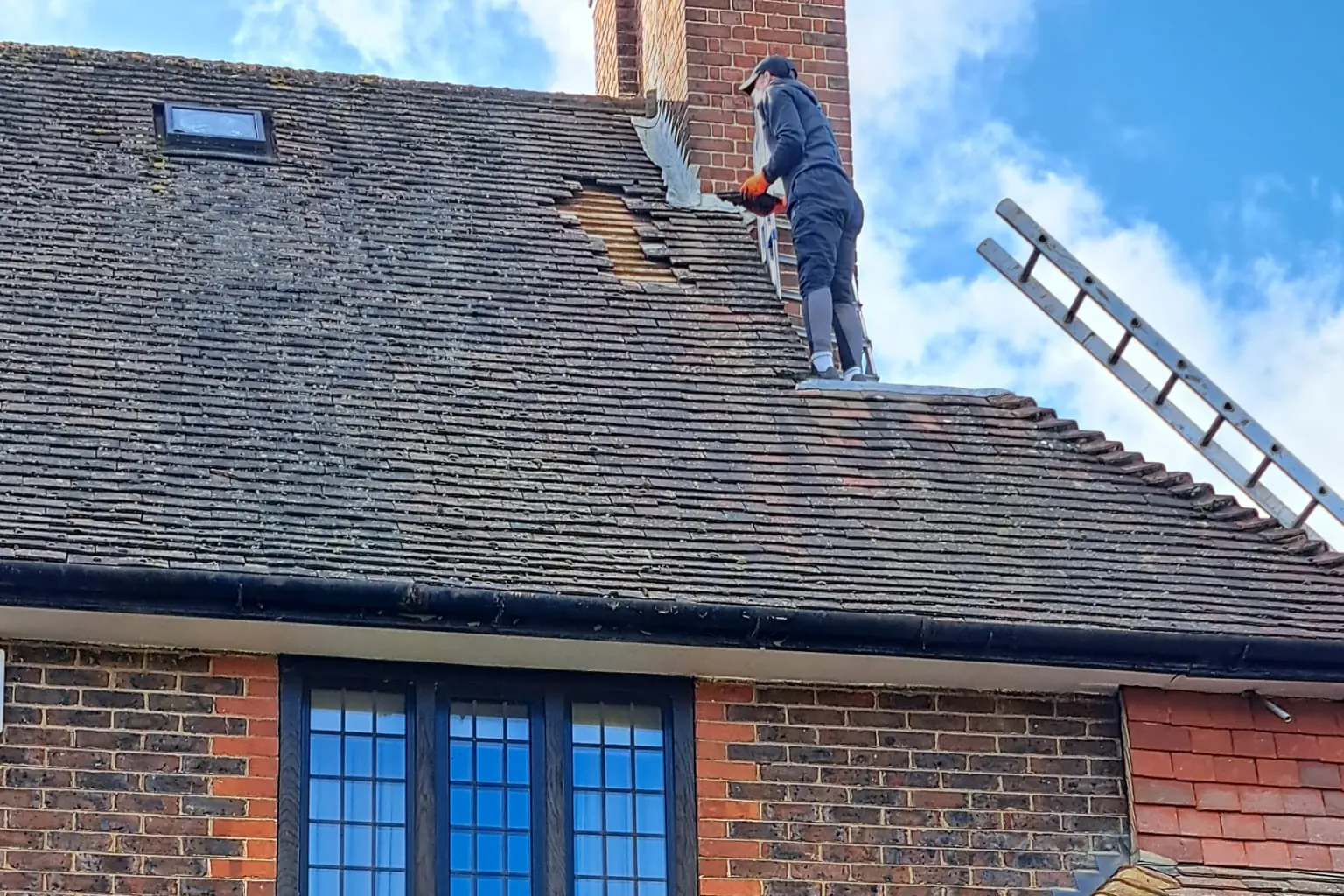
Most confusion comes from treating different numbers as the same number:
- Reading a wage as a price. An employed roofer's wage is what a firm pays them. A self-employed daily labour rate also covers a van, tools, insurance and days lost to weather. A firm's charge adds vehicles, waste disposal and standing behind the work. Your price is a fourth number, with materials and access on top.
- Assuming VAT is included. Some figures are before VAT, some after, and not every trader is VAT registered. A written price should say which.
- Forgetting the extras. Minimum charges, travel or call-out costs and emergency premiums all sit outside a bare hourly rate.
- Assuming the answer is a new roof. Plenty of leaks come from one flashing or one valley. If a smaller repair will do, we say so.
What moves the price on your own roof
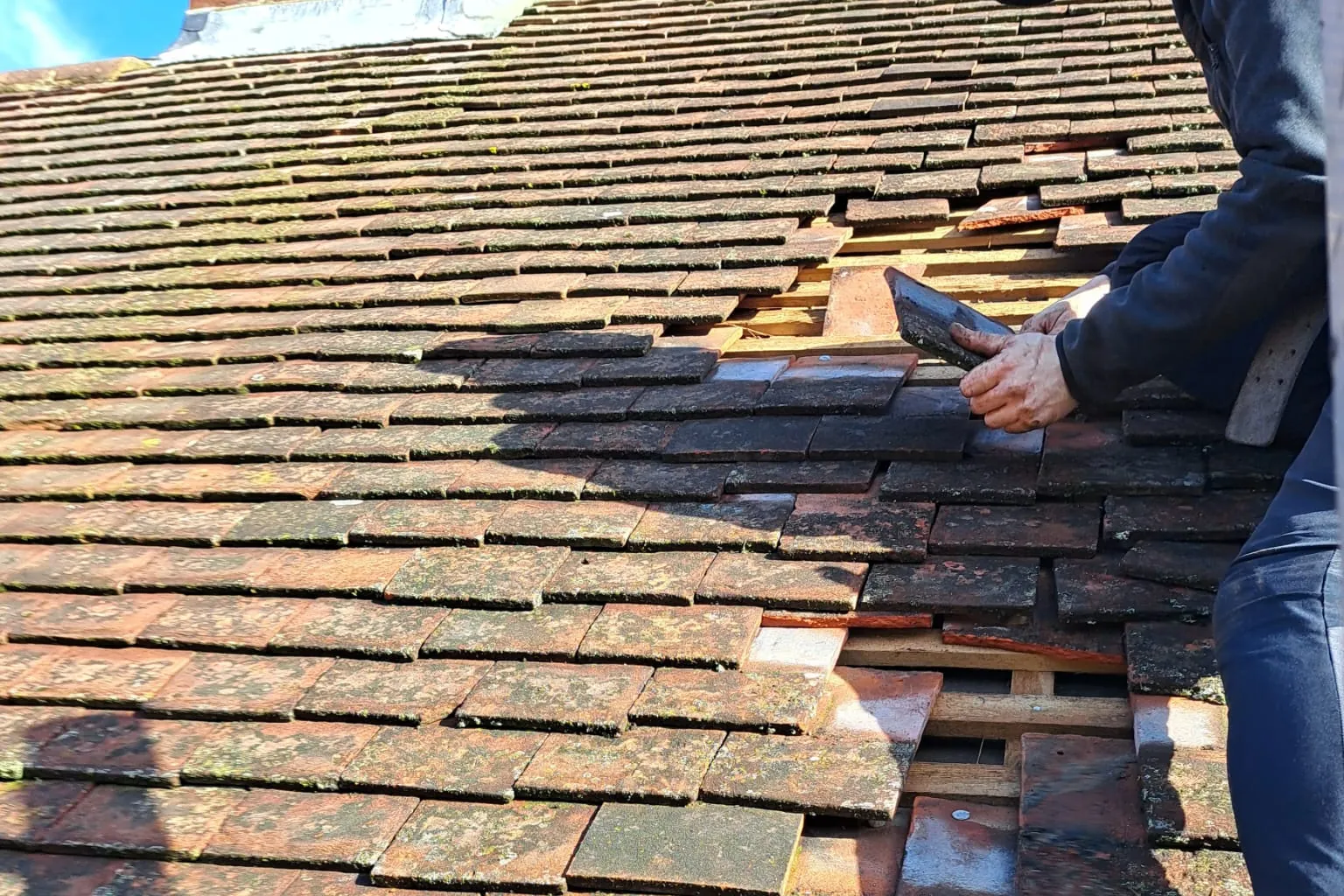
A national average will be wrong for your house. These six things decide if your job is dear or cheap, and they tell you more than any average:
- Roof type. Slate, clay or concrete tile, EPDM or GRP, standing seam zinc: each has its own labour and roofing materials, and valleys and dormers add roofing complexity.
- Height and roof access. A single-storey extension may need only a tower. A three-storey house needs full scaffolding, usually priced as its own line.
- What has to come out first. Old coverings, rotten battens or failed felt, and the waste removal that follows.
- The structure underneath. Sound timbers keep a job on its quote. Rafters or decking that need work change it.
- Location. Labour costs follow living costs, so London and the South East, Surrey included, run higher than much of the North, Wales and Scotland.
- Timing. Planned work costs less than water coming through a ceiling at night.
Larger jobs are often priced per square metre, because area tracks the work better than the clock does.
Turning an hourly question into a fixed price
The useful next step is a price for your own roof, in a set order:
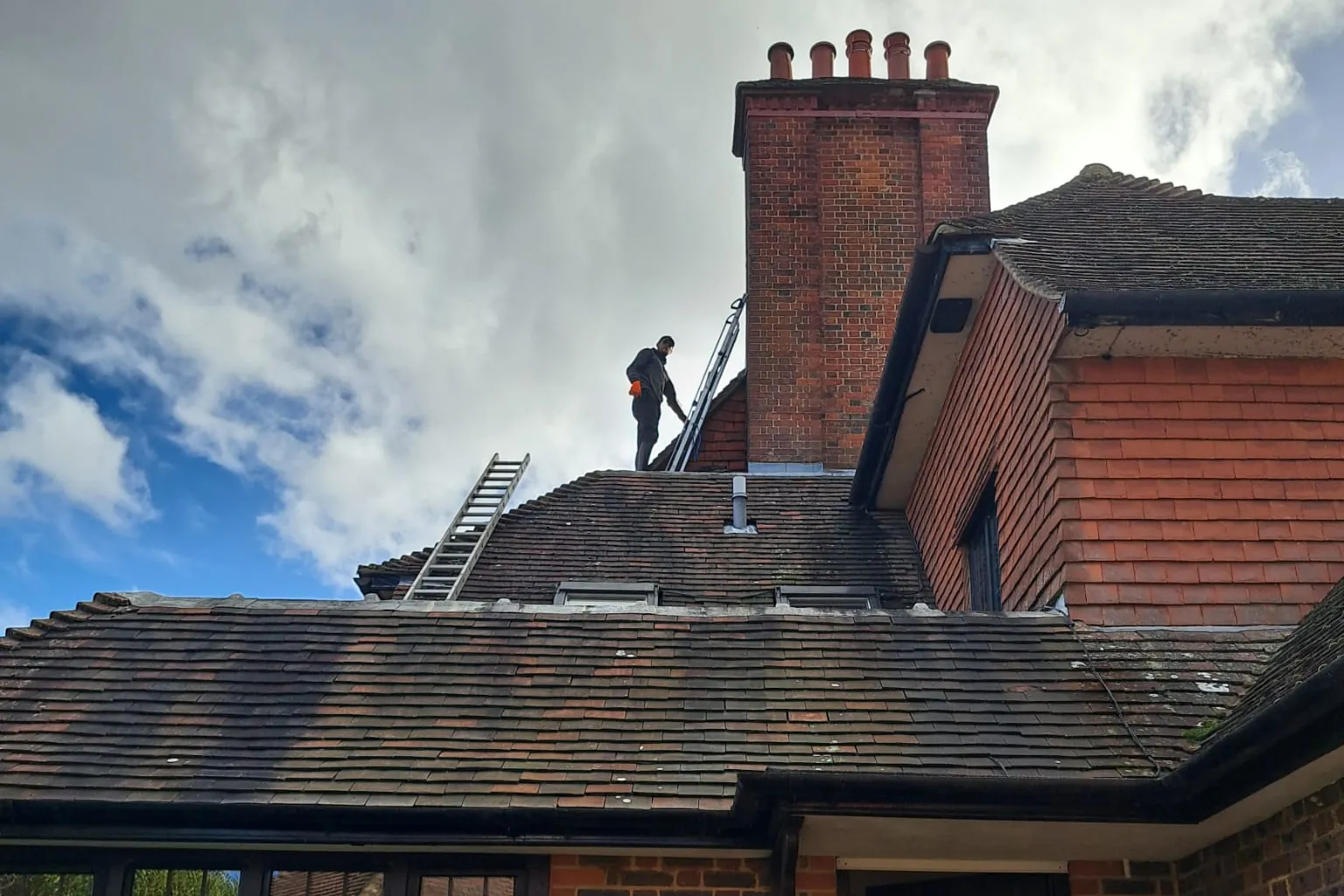
- Look from the ground. Note where the stain or slipped tile is and take a photo. Stay off the roof.
- Have the roof surveyed. A proper inspection, with a drone view where it helps, shows the condition before anybody names a figure.
- Get a fixed-price quote in writing. It should show scaffolding, materials, waste removal and VAT, and say exactly what is being done.
That is how we work across Surrey and the Wey Valley: a real person answers, the survey and quote cost nothing and carry no obligation, and our 25-year written workmanship guarantee is handed over before we leave.
The rules and safety points behind the price
Some of what you pay for is not optional:
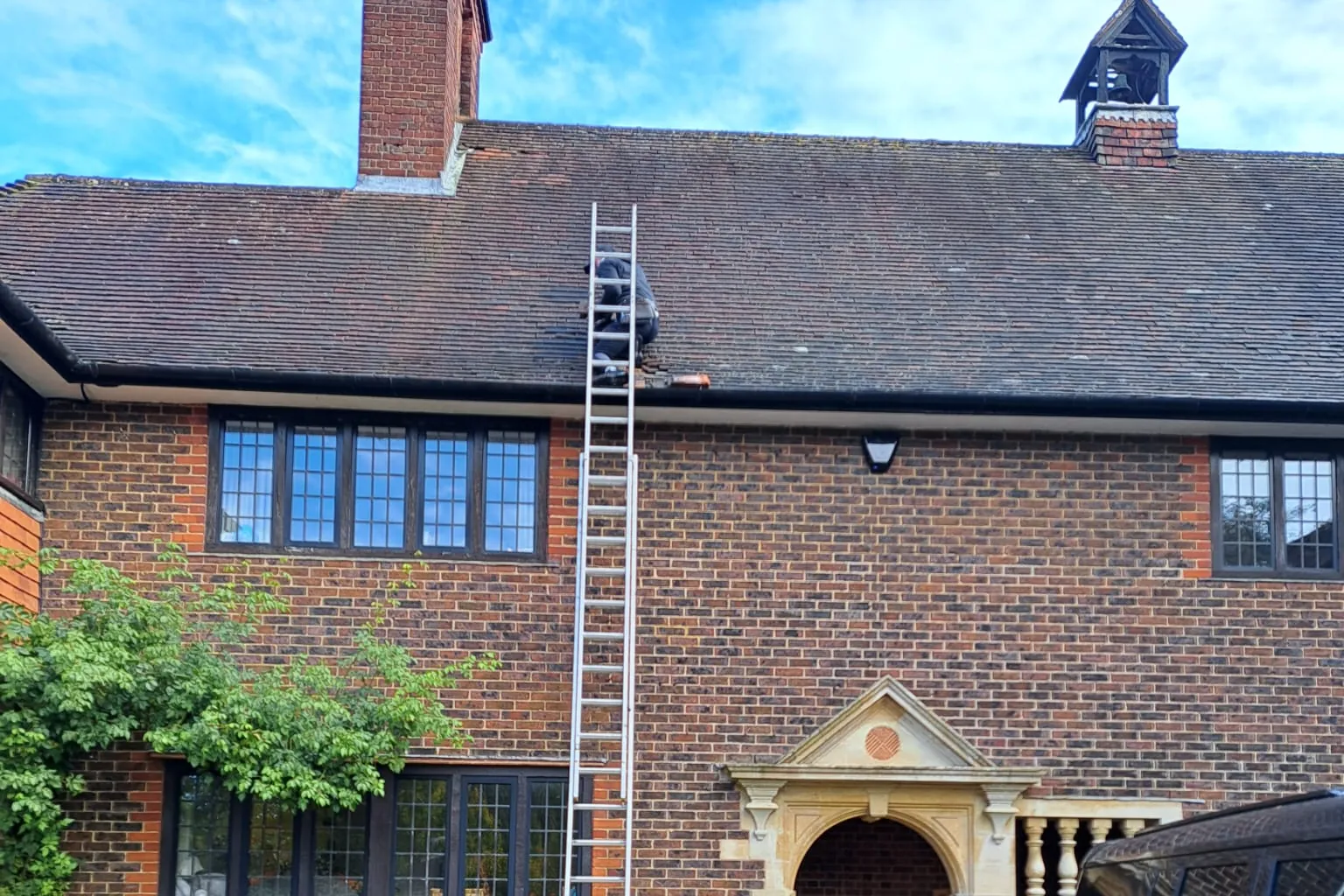
- Safe access. Working at height needs scaffolding or edge protection on most roofs. Leaving it out makes a job more dangerous, not cheaper.
- Fixings. Tiles and slates are fixed to BS 5534 for fixing and wind uplift, often with more nails and clips than the roof had before.
- Insulation on a reroof. Under Approved Document L, renewing more than half of a roof's area means bringing the whole roof up to the current insulation standard where feasible. We build that into a reroof from the start.
- Approval. GOV.UK sets out when building regulations approval is needed, and a reroof can fall within it.
- Asbestos-cement. Older garage roofs can contain it. We assess and advise the safe compliant route under the Control of Asbestos Regulations 2012; licensed removal is a separate specialist cost.
Signs that tell you what size of job you have
What you can see from the ground usually tells you where you stand:
- A damp patch after heavy rain. Often flashing, a valley or a chimney. Finding the source is the job.
- Moss lifting tiles. Hand removal and a low-pressure soft wash. A roof should never be pressure washed.
- Blistering or standing water on a flat roof. Sometimes a repair, often a covering at the end of its life.
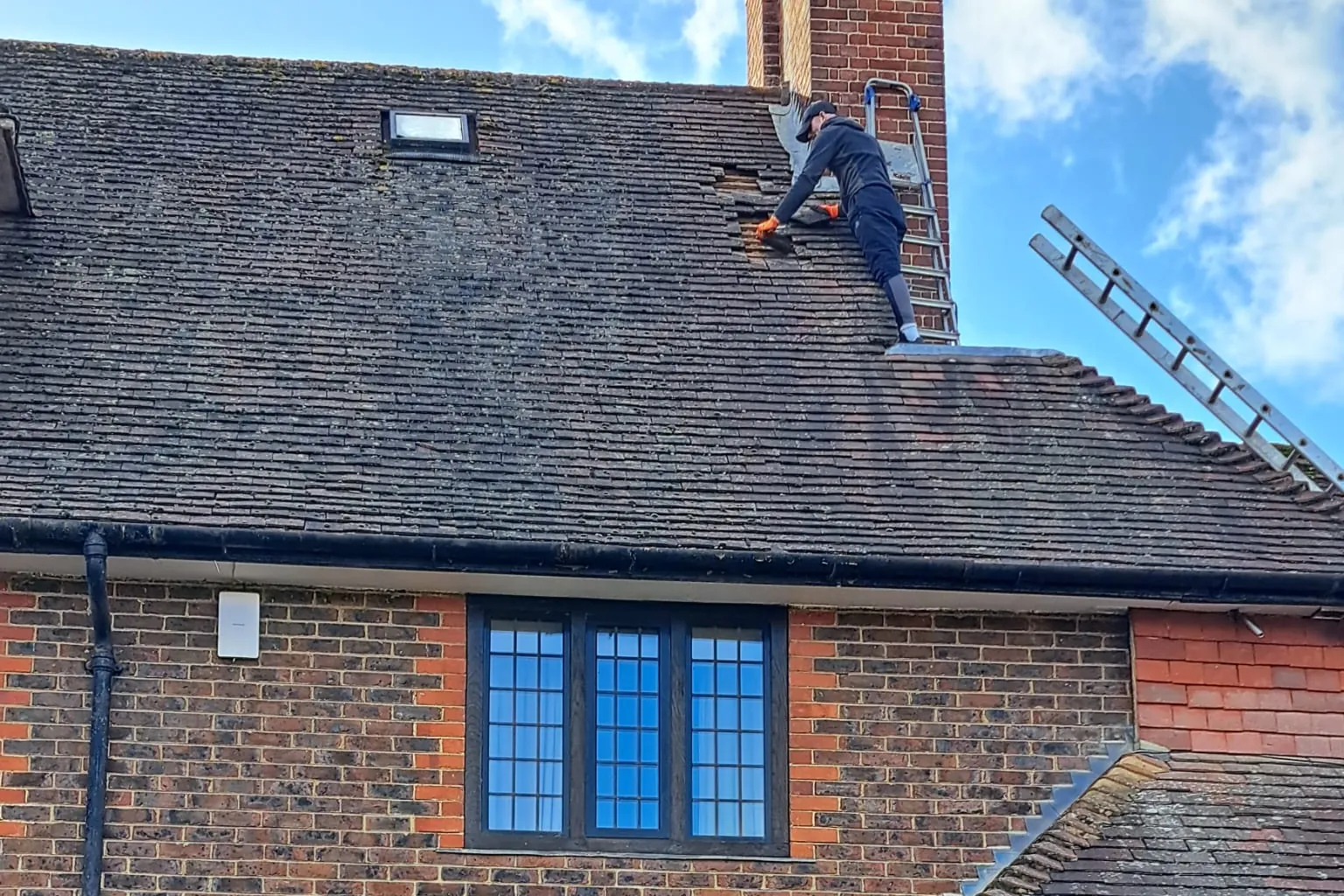
- Slipped tiles across several slopes, or a sagging roofline. Usually failing nails, battens or timbers, and the start of a reroof conversation.
- Water coming in now. An emergency. We answer 24/7, and emergencies go to the front of the queue.
Before you weigh up any hourly rate, call Wey Valley Roofing for a survey and a fixed price in writing, with no charge for the quote and no obligation.
Quick Quote OnlineCall Now: 07428 300474Call Scott — 24/7 Emergency07428 300474