
Moss looks like a cosmetic problem and behaves like a maintenance one, which is why the answer depends less on the moss and more on the roof underneath it.
The Quick Answer
- Moss holds water against tiles, which speeds up frost damage on concrete and breaks the laps on slate.
- Shed moss blocks gutters and downpipes, so overflow at the fascia often traces straight back to growth on the slopes.
- Pressure washing strips tile surfaces and drives water under laps, so hand scraping and low pressure soft wash are the only sensible routes.
- On a roof already at the end of its life, clearing moss is not the job that needs doing, and we will say so.
Scott has spent more than 36 years on Surrey roofs and still answers the phone himself, and every job carries a 25-year written workmanship guarantee handed over before the team leaves. Whether you need a roof moss removal or a roof moss removal in Godalming, we cover the whole area.
Call 07428 300474 at any hour and a real person will pick up, day, night or weekend.
Is it worth removing moss from a roof?
Yes, it is worth removing moss from a roof, provided the work is done by hand or by low pressure soft wash rather than by pressure washing. Moss holds water against tiles, blocks gutters and lifts slates at the tail, and clearing it protects the covering underneath.
Ring Wey Valley Roofing on 07428 300474 for a free survey of the moss on your roof and a fixed written price, with no charge and no obligation.
Quick Quote OnlineCall Now: 07428 300474Call Scott — 24/7 Emergency07428 300474
What moss actually does to a tiled or slated roof
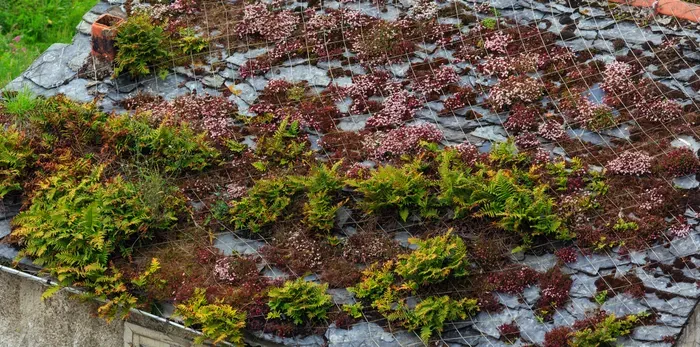
Moss is not simply untidy. It behaves like a sponge sitting on the exposed part of the tile. It holds moisture against the surface long after the rest of the roof has dried, which accelerates frost damage in the winter, because water trapped in a porous concrete tile expands when it freezes and takes a thin layer of the tile with it each time. Over enough winters the surface of the tile opens up and the tile starts absorbing water rather than shedding it.
On a slate roof the problem is mechanical instead. Moss builds up under the tail of the slate and gradually jacks it clear of the course below, breaking the lap that keeps wind driven rain out. Once a slate is riding on a cushion of moss it is also much easier for wind to lift, and the nails or hooks holding it take more load than the fixing specification ever assumed under BS 5534.
The other consequence is drainage. Moss sheds constantly in dry spells and in heavy rain, and it all ends up in the gutter, where it forms a dam. Blocked gutters overflow at the fascia, soak the wall head and rot timber that would otherwise have lasted decades. Whether you need a roof moss removal or a roof moss removal services Guildford, we cover the whole area and look at the gutters as part of the same visit.
When clearing moss is the wrong call
There are roofs where scraping moss off is not the priority. If the tiles are already delaminating, if slates are shattering at the nail hole, or if the roof is at the end of its life, taking the moss off simply reveals a covering that needs replacing and may cost you a few tiles in the process. On those roofs the honest answer is to say so rather than sell a clean.
Access matters too. Moss removal by hand means someone walking or standing on the covering, and on a fragile or badly weathered roof that is a genuine risk to the tiles. A survey settles it, and a drone view helps where getting on the roof would do more harm than the moss is doing. Whether you need a roof moss removal or a roof moss removal services Woking, we cover the whole area and will tell you plainly if it is not worth doing.
Why pressure washing costs more than it saves
A pressure washer takes moss off quickly and it takes the surface of the tile off with it. On concrete tiles it strips the factory applied coating, leaving a rough open surface that grows moss back faster and thicker than before. On slate it drives water up under the laps and into the roof space. It also flushes bedding out of mortar joints at ridges and hips, and dislodges the pointing around chimneys.
Hand scraping and low pressure soft wash are slower and they leave the covering intact. That is the whole point. Roof coatings marketed as an aftercare step are a separate matter, and there is no reason to be talked into one just because the roof has been cleaned.
What a moss clearance should include
Done properly, the job is more than brushing the visible growth off the slopes.
- Hand scraping the courses, working down the slope so debris is not forced under the laps.
- Clearing valleys and behind chimneys, where moss and silt collect first and hold water longest.
- Emptying and flushing gutters and downpipes, then checking falls so water actually reaches the outlet.
- Checking what the moss was hiding: slipped tiles, cracked flaunching, tired flashings, nail sickness.
- Leaving the ground clean, because a moss job produces a surprising volume of debris.
That last inspection point is where the real value sits. Moss grows heaviest on the shaded, damp, slow drying parts of a roof, which tend to be the same places small defects start. Clearing it once and reporting honestly on what is underneath is worth considerably more than the cleaning itself.
Ring Wey Valley Roofing on 07428 300474 for a free survey of the moss on your roof and a fixed written price, with no charge and no obligation.
Quick Quote OnlineCall Now: 07428 300474Call Scott — 24/7 Emergency07428 300474