
Most people ask about sweeping when the thing that actually fails is the brickwork above the tiles.
The Quick Answer
- Once a year suits most homes, twice a season for regular wood burning.
- Gas, oil and unused flues still need an annual check for nests, debris and falling liner.
- Sweeping clears the flue, it does not tell you anything about pointing, flaunching, pots or flashing.
- Damp on a chimney breast is usually a saturated stack, not a sooty flue.
Scott has spent more than 36 years on Surrey roofs and still answers the phone himself, and every job carries a 25 year written workmanship guarantee. Whether you need chimney work or chimney work in Godalming, we cover the whole area.
Call 07428 300474 any time and a real person will pick up.
How often does a chimney really need to be cleaned?
Once a year for most homes, and more often if you burn wood hard through the winter, when twice a season is closer to the mark. A chimney used only occasionally, or serving a gas appliance, still wants an annual look, because soot is only half of what goes wrong up there.
Book a free chimney survey with Wey Valley Roofing on 07428 300474 and get an honest written price on repointing, flaunching or flashing before the winter rain finds the cracks.
Quick Quote OnlineCall Now: 07428 300474Call Scott — 24/7 Emergency07428 300474
What you burn sets the interval, not the calendar
The frequency question gets answered badly because people treat every chimney the same. It is the fuel and the way the appliance is run that decide how fast the flue fills up.
- Wood, burned regularly. Twice a heating season is sensible. Wet or unseasoned timber tars the flue quickly, and that deposit is the one that catches fire.
- Smokeless fuel. Once a year is usually enough for normal use.
- Bituminous house coal. Twice a year, because it soots heavily.
- Oil and gas. Annually. Very little soot, but debris, nests and rendering falling from a decayed liner all block a flue just as effectively.
- An unused chimney. Still an annual check from outside. Nothing is going down it, but plenty gets in.
The other variable is the chimney itself. A tall, cold, external stack on an exposed Surrey hillside draws differently from a short internal one, and a cold flue condenses more, which means more deposit. If a stove has been fitted where an open fire used to be, the flue is doing a different job at a different temperature and the old habits do not carry over.
Whether you need chimney work or chimney work services Guildford households rely on, we cover the whole area, and the honest answer is often that the sweeping interval matters less than the state of the masonry above the roof line.
Sweeping and chimney condition are two separate jobs
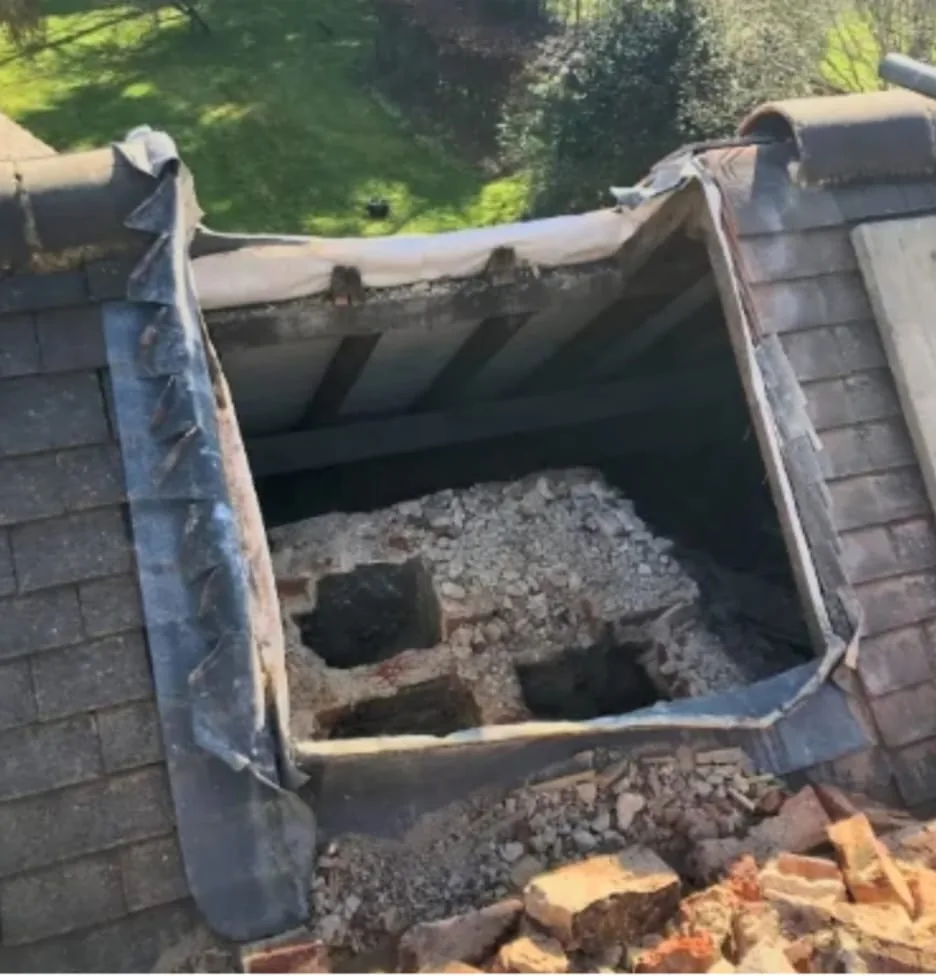
A sweep clears the flue. That is worth doing and it is not what we do. What tends to be missed is everything the sweep cannot reach from inside: the pointing, the flaunching, the pots, the flashing where the stack meets the tiles. Those fail slowly and quietly, and they cause more damage than a sooty flue ever will.
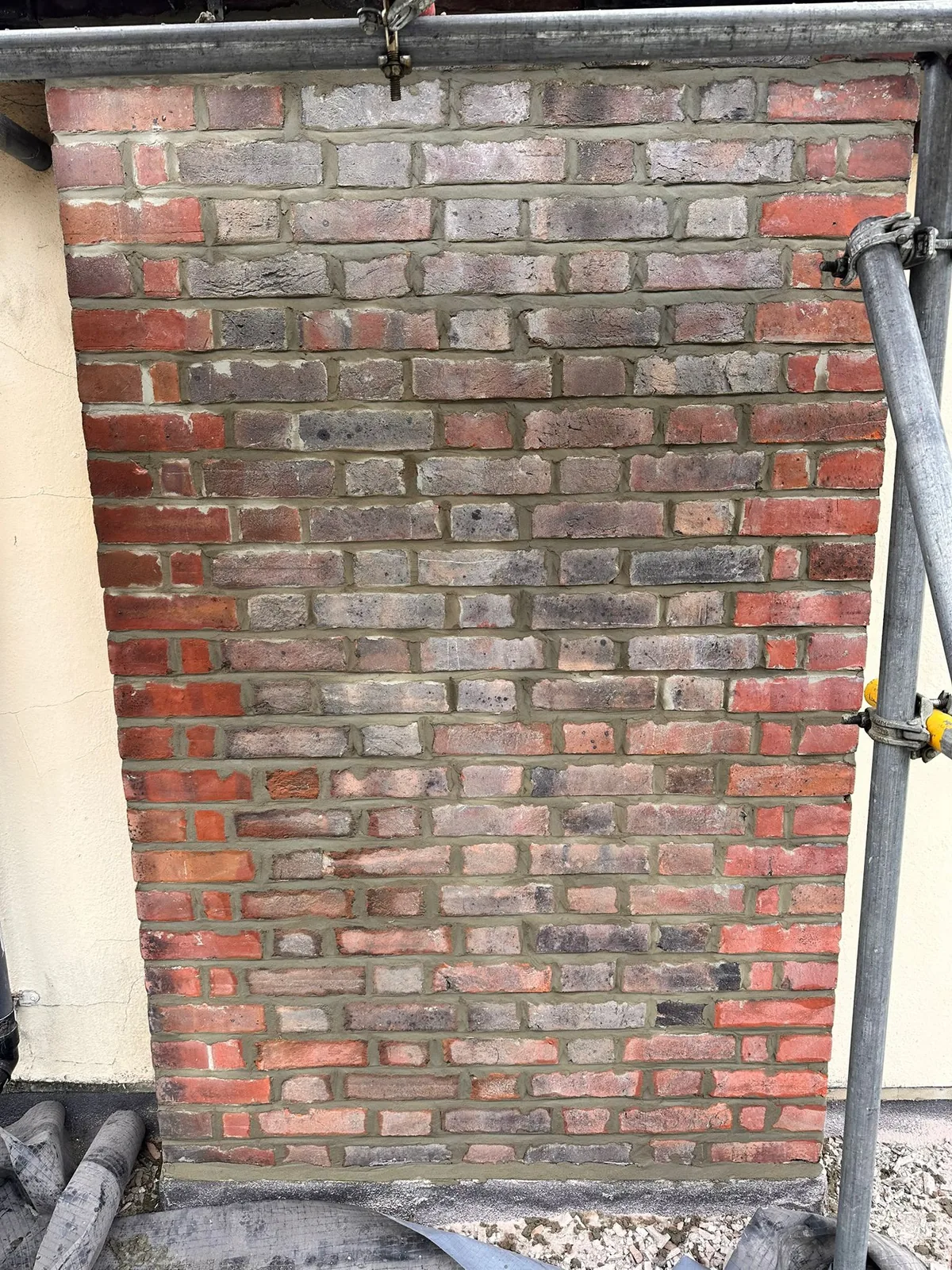
The pattern we see year after year across Surrey and the Wey Valley runs like this. Mortar joints on an exposed stack weather out. Rain gets into the brickwork. The flaunching, the sloped mortar cap holding the pots, cracks and lets water straight down the outside of the flue. Damp appears on a bedroom ceiling near the breast, and everyone blames the roof. Then the flashing gets pointed at, when the actual fault is thirty courses of saturated brick.
Signs the stack, rather than the flue, is the problem:
- Staining or tide marks on the chimney breast inside, especially after driving rain rather than after a fire.
- Mortar dust or small pieces of brick in the gutter below the stack.
- A pot that looks tilted, or bedding mortar that has broken away around its base.
- Cement fillets round the base of the stack instead of lead, cracked along their length.
- A smell of soot in a room even when nothing is lit, which usually means damp meeting old deposits.
Whether you need chimney work or chimney work in Woking properties need after a wet winter, we cover the whole area, and we will say plainly if repointing is all that is wanted rather than a rebuild.
An annual look from outside is the part people skip
Sweeping happens on a schedule because it is booked from inside the house and it is easy to remember. The outside of the stack gets looked at when something has already gone wrong. Reverse that and the whole thing gets cheaper.
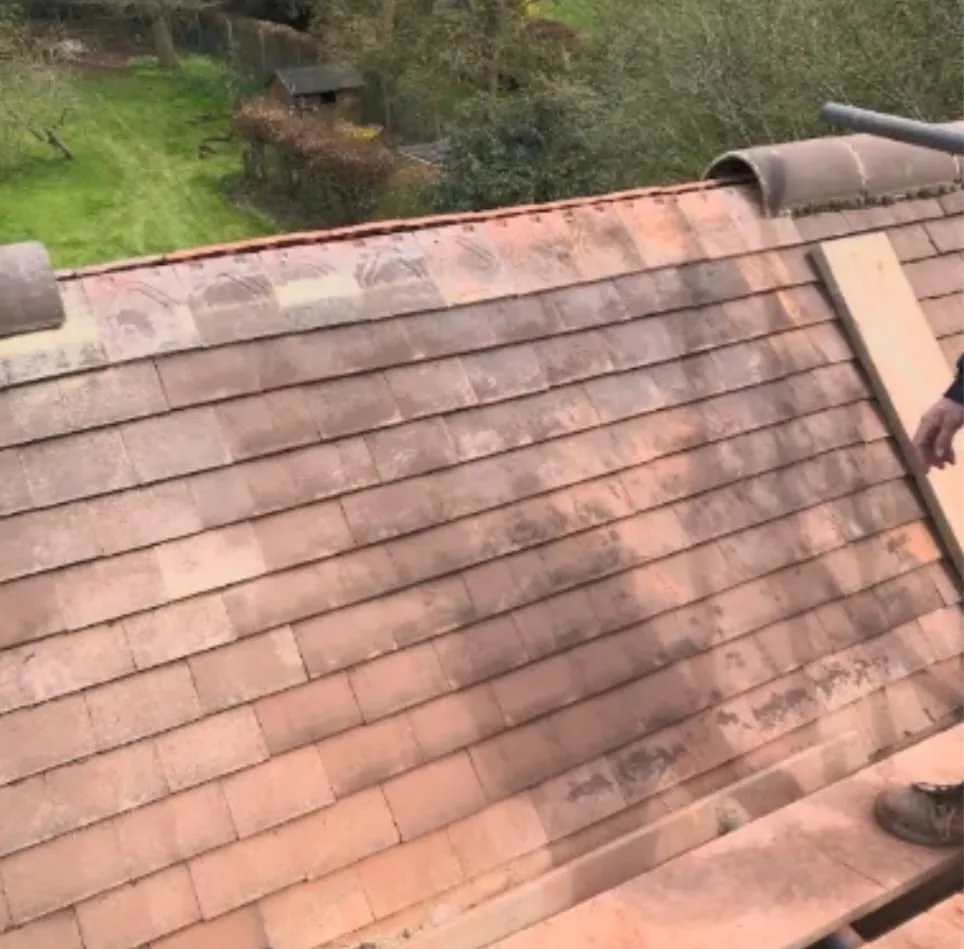
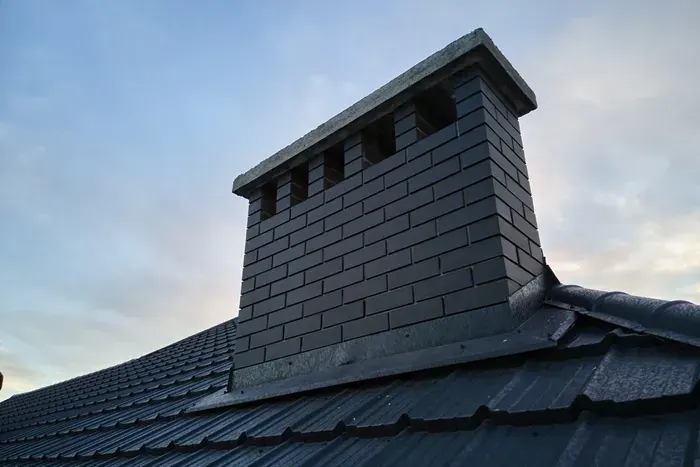
Once a year, ideally in autumn before the weather turns, the stack wants inspecting properly. That means eye level or a drone view where the pitch makes it sensible, not a squint from the lawn. We are looking at the state of the pointing, whether the flaunching has cracked, whether the pots are sound and correctly capped, whether the lead soakers and back gutter are still doing their job, and whether the tiles around the stack have been disturbed.
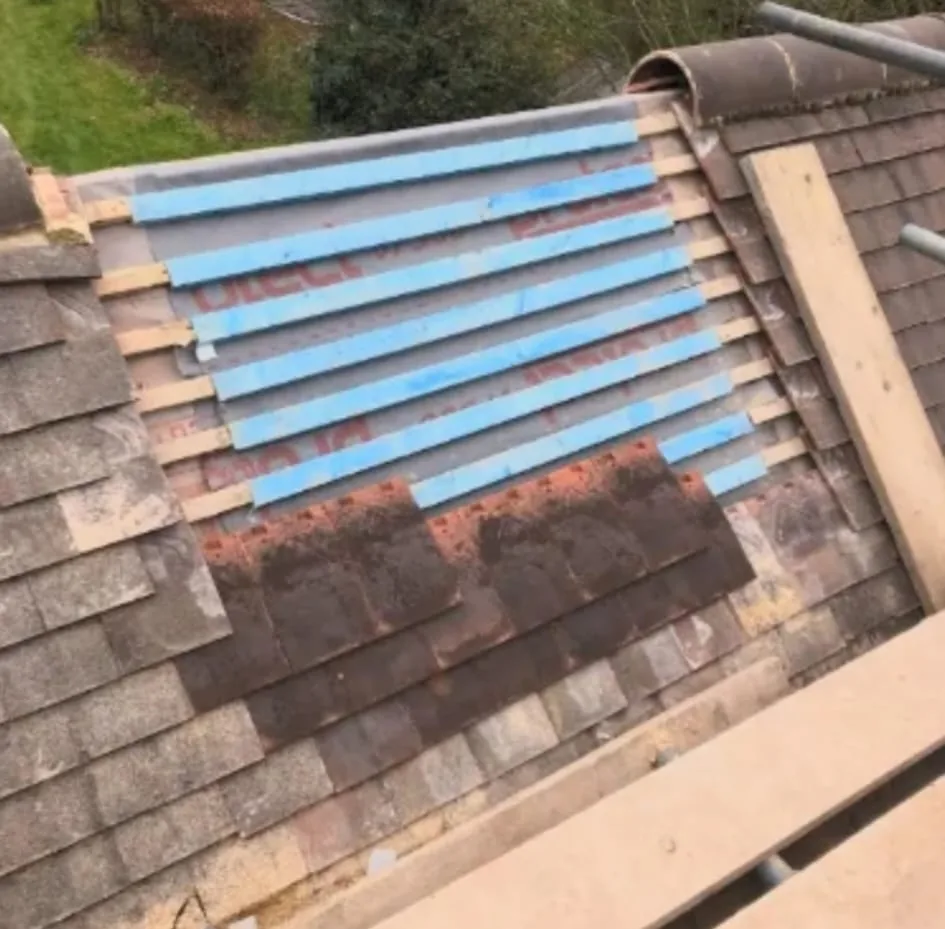
Our chimney work covers repointing, flaunching, flashing, partial and full rebuilds, pots and cowls, with leadwork detailed to Lead Sheet Association guidance rather than smeared in mortar. Where a stack is being taken down and rebuilt, structural work of that kind sits inside the building control regime that GOV.UK sets out on building regulations approval, and that is a conversation worth having before the scaffold goes up, not after.
A cowl is worth a mention. Cap an unused flue and you keep out rain, birds and squirrels, but it still needs to breathe, or you will trap moisture in the brickwork and make the damp worse. Vented caps exist for exactly that reason.
Getting the sequence right saves doing it twice
The order matters. There is no sense sweeping a flue in October if the stack is being rebuilt in November, and no sense repointing brickwork that is soaked through until it has had a chance to dry. Equally, if a stove is going in, sort the flue and the stack first, because access is never easier than when the work is already open.
What we will not do is talk anyone into a rebuild that a day of repointing would settle. Scott has been on Surrey roofs for more than 36 years and has seen enough chimneys condemned for the sake of a cracked cap. The survey is free, the price comes in writing, and if the smaller repair is the right one, that is what gets said. Every job carries a 25 year written workmanship guarantee, handed over before the team leaves, and that applies to a repointed stack the same as it applies to a new roof.
So the answer to how often, in practice: sweep on the interval your fuel demands, and have the outside of the stack looked over once a year while you are at it. Do both and a chimney will outlast most of the roof around it.
Book a free chimney survey with Wey Valley Roofing on 07428 300474 and get an honest written price on repointing, flaunching or flashing before the winter rain finds the cracks.
Quick Quote OnlineCall Now: 07428 300474Call Scott — 24/7 Emergency07428 300474