
Flashing looks like the easiest thing on a roof to fix yourself, which is exactly why so much of it leaks.
In Short
- Low, reachable flashing on a garage or porch can be a sensible DIY repair if the lead itself is sound.
- Chimneys, valleys, steep pitches and anything above single storey are not householder work.
- Mastic and sealant over failed flashing buys one winter and then channels water behind the lead.
- Lead code, maximum lengths, chased joints and wedges are what make a flashing last decades.
- Water getting behind a flashing turns a cheap job into rafter and wall plate repairs.
Scott has spent more than 36 years on Surrey roofs and still answers the phone himself. Whether you need lead work & flashing or lead work & flashing in Godalming, we cover the whole area, with a 25-year written workmanship guarantee on every job.
Call 07428 300474 and talk it through before you get the ladder out.
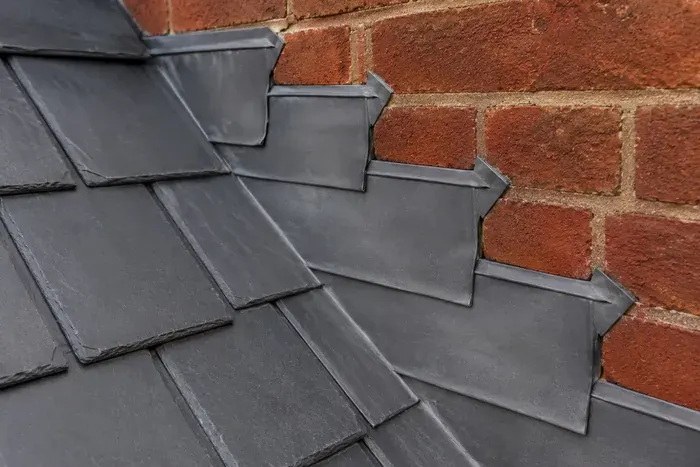
Can I replace roof flashing myself?
You can replace roof flashing yourself on a low, safely reachable roof if you are confident working at height and willing to dress lead properly rather than seal over it, but most failures we are called to are botched DIY flashing, so on anything steep, high or tied into a chimney it is work for a roofer.
If your flashing is weeping, patched or already been sealed once, call Wey Valley Roofing on 07428 300474 for a free survey and a fixed price in writing.
Quick Quote OnlineCall Now: 07428 300474Call Scott — 24/7 Emergency07428 300474
What flashing actually does, and why it fails
Flashing is the weatherproofing at every joint where the roof covering stops and something else begins: a chimney, a parapet, an abutment wall, a dormer cheek, a soil vent pipe. Water always finds the joint before it finds the middle of a slate. Get the flashing right and the rest of the roof looks after itself.
Traditional flashing on Surrey houses is milled lead, dressed to the shape of the tiles or slates, tucked a good 25mm into a raked-out mortar joint, wedged, and pointed. It lasts decades because it moves with the building instead of fighting it. When lead flashing fails it is almost never the lead that has given up. It is the pointing that has washed out, the wedges that were never fitted, the lengths that were made too long so thermal movement has split them, or the whole lot has been slathered in mastic by somebody who did not want to cut a chase.
That last one is the single most common thing we take off a roof. Sealant on flashing buys a winter, maybe two. Then it shrinks, lifts at the edge, and channels water behind the lead rather than off it. The stain on the bedroom ceiling appears three metres from the actual leak, and by then the wall plate is damp. Whether you need lead work & flashing or lead work & flashing services Guildford, we cover the whole area, and a fair share of those calls start as a repair somebody attempted themselves in August and stopped thinking about until February.
If your flashing is weeping, patched or already been sealed once, call Wey Valley Roofing on 07428 300474 for a free survey and a fixed price in writing.
Quick Quote OnlineCall Now: 07428 300474Call Scott — 24/7 Emergency07428 300474
The DIY jobs that are reasonable and the ones that are not
There is an honest line here. Some flashing work is within reach of a competent, careful householder. Plenty of it is not, and it is worth being blunt about which is which.
- Reasonable, with care: repointing a short length of cover flashing on a single-storey garage abutment you can reach safely from a properly footed ladder or a tower, where the lead itself is sound and only the mortar has failed.
- Reasonable, with care: replacing a short apron flashing on a low porch roof, provided you can get the tiles off and back without cracking them.
- Not DIY: anything on a chimney. Chimney flashing is four separate details working together, front apron, side step flashings, back gutter and soakers, and the back gutter is where most chimneys leak.
- Not DIY: valleys. A valley carries the water off two roof planes at once and there is no margin in it.
- Not DIY: anything above single storey, anything on a steep pitch, anything on brittle or asbestos-cement sheeting, and anything where you would be standing on the covering to reach it.
Two more that stop people cold. Lead is heavy and it is sold in codes, and using the wrong code, code 3 where code 4 or 5 belongs, gives you flashing that tears at the fold within a couple of years. And leadwork wants a chase cut into the mortar bed, which means an angle grinder held at arm's length above your head on a ladder. That is not a skill you pick up on the day.
The same team covers lead work & flashing services Woking.
Doing it properly means standards, not guesswork
Good flashing follows rules that exist for a reason. Lead Sheet Association guidance sets the maximum lengths for each detail, roughly 1.5m for a piece of cover flashing, with lapped joints between them, precisely so the metal can expand and contract without splitting. Fixing and wind uplift on the surrounding covering is a British Standard matter under BS 5534, because a flashing is only as good as the tiles it laps over. And where roof work becomes structural or a significant part of a covering is replaced, building control comes into it, as the GOV.UK guidance on building regulations approval sets out.
None of that is here to make simple work sound complicated. It is the difference between a repair that outlives you and one you revisit every autumn. We work to those standards because we would rather cut a proper chase once than come back three times. Whether you need lead work & flashing or lead work & flashing services Woking, we cover the whole area, and the method does not change with the address.
The other thing standards protect is the material around the joint. Water behind a flashing does not stay at the flashing. It runs down the inside face of the abutment, into the timbers, and rots the ends of rafters and the wall plate. A £40 length of lead ignored for four winters becomes carpentry.
Access and honest cost, not the price of the lead
Householders price flashing work by the metal and then wonder why a quote looks the way it does. The lead is the cheap part. What the job actually needs is safe access, scaffold or a tower rather than a ladder leaned on a gutter, tiles lifted and set aside without breaking them, mortar raked out to depth, lead dressed cold with a bossing mallet to the exact profile of the covering, wedges fitted at proper centres, and then pointing that will not wash out in the first heavy spell.
Add the ladder work and the height and you have the real reason DIY flashing goes wrong. It is rarely a failure of intelligence. It is the fact that you cannot boss lead accurately while also holding on. If you are looking for a roofer close to home somewhere across Surrey and the Wey Valley, a real person answers the phone here, day, night or weekend, and Scott will tell you straight if the job is a small repair rather than a big one.
We survey free, including a drone view where that saves getting on the roof at all, and the price comes in writing with nothing added afterwards. Every job, repair or full re-roof, carries a 25-year written workmanship guarantee handed over before the team leaves. If you have already had a go at the flashing yourself, say so. It changes nothing about how we quote it.
If your flashing is weeping, patched or already been sealed once, call Wey Valley Roofing on 07428 300474 for a free survey and a fixed price in writing.
Quick Quote OnlineCall Now: 07428 300474Call Scott — 24/7 Emergency07428 300474